Part I
The Taxonomy of Performance:
from the Dyewood Trade to the Bow-maker's Bench
From Pomet to Guillaumin, from the Rasphuis of Amsterdam to the quays of Recife — how a global market in red wood functioned for two centuries without ever durably fixing the botanical identity of the woods it traded.
The economic history of natural dyes has long focused on hegemonic, clearly identified export commodities: cochineal, indigo, logwood (Haematoxylum campechianum), or the prestigious pernambuco wood (Paubrasilia echinata, formerly Caesalpinia echinata).[1] A growing body of research in the history of raw materials (Dapson and Bain, 2015; Marichal and Pretel, 2024) has shown that these trades operated in practice according to a logic of vernacular appellations — that is, the common names assigned by merchants and craftsmen, independently of learned classifications — and of interchangeable performance categories, rather than according to botanical taxonomy (the classification of living organisms by species). This essay extends that framework to a case that has, to date, rarely been examined in a systematic way: the supply chain for bow-making wood that fed European instrument-making from the eighteenth to the twentieth century.
In a commercial system built on fluctuating trade names and near-total absence of traceability, assuming that cargoes contained a single, reliably identified botanical species projects onto the period a precision it did not possess. This heterogeneity was not the product of deliberate fraud: it stemmed from a structural indifference to botanical precision, entirely normal in a trade that had neither the tools nor the need to practice it. To give this dynamic a concrete face, the essay follows a revealing case study: a Mexican tropical timber whose commercial journey, from Pacific ports to European workshops, illustrates with precision how a performance-based system could function without botanical identification. The argument proceeds in three stages: first, the commercial and nomenclatural logic that structured this market over the long term; next, the Mexican case as a plausibility study, examining the conditions under which related species could have integrated into historical supply chains; and finally, the sorting mechanisms that account for the apparent botanical homogeneity of prestige bows, despite the porosity of the supply base.
The "Brazilwood" Category: a Chemical Prism Rather than a Botanical One
In the nineteenth century, the terms "bois de Brésil," "brésillet," or pernambuco did not designate a single biological species, but a commercial category defined by chemical composition. The criterion for evaluating a wood was not its membership in any given botanical species, but its concentration of brazilin — a colourless to pale yellow precursor that oxidises in air to brazilein, the active red-to-orange pigment used in dyeing. Throughout this essay, the term "brazilin" is used for convenience to denote the entire pigment system, in keeping with the commercial usage of the period.
As Dapson and Bain (2015) demonstrate, the dyewood trade was organised around a principle of practical interchangeability: trees of different species — Asian sappan (Caesalpinia sappan), Central American braziletto (Haematoxylum brasiletto), and Brazilian pernambuco (Paubrasilia echinata) — reached the same European textile markets under the same generic name "Brazilwood," because they produced similar hues in the dyer's vat. Merchants and dyers alike privileged the performance of the dye bath and the fixing power of metallic mordants over any form of scientific rigour.
The pre-modern market for exotic timbers did not operate according to Linnaean taxonomy — which classifies living organisms by genetic descent and comparative morphology — but according to what may be called a taxonomy of performance: a system of classification that groups materials not by species but by functional properties — dyeing yield, density, hardness, colour, behaviour under the tool. Spices, resins, oils, and tropical timbers were all classified on this basis. "Pernambuco" — whether the dyewood of the eighteenth and nineteenth centuries or the bow-wood of today — therefore designates a commercial performance category, not a biological species. The term is used here as an analytical category, not merely as a description of loose usage: it names a coherent and internally consistent classificatory logic — economically rational and historically durable — that operated as a system in its own right, rather than as a failure to achieve botanical precision. This distinction is essential to the argument that follows. To fault the nineteenth-century market for grouping several taxa under a single name is to apply retrospectively a conceptual framework — binomial taxonomy — that was neither operational on the dockside nor relevant in the dyer's vat. This does not mean that the concept of fraud was unknown to contemporaries: on the contrary, in transactions where a premium grade was contracted at high price — typically Fernambouc — and delivered in another species, the operation could well be designated as fraud (Guillaumin, 1859, regarding sappan substituted for Fernambouc; see below the section on density selection and Guillaumin's pith canal test). But this category applied only to high-end contractual interfaces; it did not characterise the general fluidity of a trade that operated without difficulty using interchangeable woods, so long as the grade paid corresponded to the performance delivered.
Reference: Commercial Names and their Botanical Referents
How to read this table: every name in the left-hand column is a commercial grade, not a species. Several names point to the same species; the same name covers several species. It is this absence of one-to-one correspondence that defines the "taxonomy of performance."
| Commercial name(s) | What the trade designated | Modern species | Family | Origin |
|---|---|---|---|---|
| Bois de Brésil / Fernambouc / Pernambouc | The premium red grade, the most expensive; today the reference bow-wood | Paubrasilia echinata (ex-Caesalpinia echinata) | Fabaceae | Atlantic coast of Brazil |
| Sapan / Sappan / "Japan Brazilwood" | Asian grade, predating the American wood; principal competitor of Fernambouc | Caesalpinia sappan | Fabaceae | South and South-East Asia |
| Brésillet / Palo de Brasil / Braziletto | Lower grades; dense red woods from the Caribbean and the Mexican Pacific | Haematoxylum brasiletto; Caribbean Caesalpinia spp. (C. brasiliensis, C. bahamensis); C. platyloba (now Coulteria platyloba) | Fabaceae | Mexico (Pacific), Caribbean, Central America |
| Campêche / Logwood | Blue-black dyewood, commercial neighbour but chemically distinct | Haematoxylum campechianum | Fabaceae | Mexico (Yucatán), Central America |
| Bois de la Chine / Amourette / Letterwood / Snakewood | Marquetry and pre-Tourte bow wood; geographically misleading name (native to Guiana, not China) | Brosimum guianense | Moraceae | Guianas, Suriname, northern Brazil |
| Corail / Coral wood | Name given for the bright red colour; abandoned bow wood (too porous) | Pterocarpus officinalis, P. rohrii (retrospective identification, Détienne 2002) | Fabaceae | Caribbean |
| Bois de fer / Ironwood | Name given for hardness alone; catch-all term | No single species — dozens of South American woods with density > 1 (boco, wamara, pau ferro…) | Several | South America |
| Bois d'abeille | Workshop name from Mirecourt (bow-making context only, not dyeing); uncertain etymology — probable colour reference (Bruleaux, 1989) | Manilkara bidentata (massaranduba) and other Manilkara spp. | Sapotaceae | French Guiana, Amazonia, northern Brazil |
It should also be noted that Linnaean taxonomy was not absent from learned discourse: it simply operated in parallel with commerce, without steering it. Three systems of designation coexisted at the turn of the nineteenth century. The commercial-vernacular system (Savary, 1726; Beausobre, 1791; Guillaumin, 1859), which grouped Fernambouc, Lamon, Sainte-Marthe, Sapan, and brésillet into grades; the apothecary system in pharmaceutical Latin (Dictionnaire raisonné de matière médicale, 1773), which designated the whole under Lignum brafilianum rubrum; and the Linnaean-botanical system (Fourcroy, 1800), which attempted to assign a species of the genus Caesalpinia to each commercial variety. None of these three systems converged with the others, and the Linnaean-botanical was itself far from settled: Fourcroy's attribution of Fernambouc to Caesalpinia crista is today considered erroneous (the recognised species is Paubrasilia echinata, ex-Caesalpinia echinata; C. crista is now identified as a pantropical liane — Asia, Pacific, Caribbean — with no botanical connection to Brazilian Fernambouc, making the error not a minor reclassification but a substantial misidentification).[3] More striking still, Girardin in the fourth edition of his Leçons de chimie élémentaire (1877) repeats the same error in an even more symptomatic form. He assigns C. crista to Fernambouc — but assigns C. echinata, the species we now call pernambuco, to the Bois de Sainte-Marthe, a lower commercial grade. This inversion is not corrected in 1910: in his Bois industriels indigènes et exotiques, the botanist Beauverie reproduces the same attribution, classifying C. echinata under "Bois de Sainte-Marthe et de Nicaragua." The same species thus bore, according to authoritative chemists and botanists over more than a century, distinct grade names depending on the author consulted. Linnaean nomenclature had not resolved this variability: it had created a new layer of it. The trade in Fernambouc and its substitutes thus unfolded for over a century in an environment where the botanical nomenclature of the period was neither definitively settled nor in agreement with commercial practice.
Commerce Names Before Science Classifies
In Antiquity, commodity names passed through Phoenician, Greek, and Latin commercial filters: indicum simply meant "the substance from India," with no botanical precision. In the Middle Ages, the Arab golden age dominated the distribution of luxury goods, and European languages borrowed directly from Arabic the names for sugar (sukkar), cotton (qutn), syrup (sharab), saffron (za'faran), and coffee (qahwa). In the Renaissance and colonial period, maritime powers imposed their own logics: American maize became "blé d'Inde" (Indian wheat) in French, the turkey became "turkey" in English through confusion with Levantine trade routes, and an entire continent was christened "Indies" through a navigational error. Tea reveals the route of its transmission: cha via the overland Chinese route (Russian chai, Persian chay, Turkish çay), te via the Dutch maritime route through the Fujianese dialect (English tea, French thé, German Tee). The name carries the trace of the commercial journey far more than the trace of the plant. Vernacular names record less the biological nature of things than the historical conditions of their circulation.
The world of music and its commerce are no exception to this rule. In the historical supply chains of raw materials for instrument-making — tonewood and bow wood, resins for rosin, varnishes, gut strings — commercial nomenclature resisted scientific standardisation strongly: yesterday as today, names frequently continued to designate a material, acoustic, and mechanical performance rather than a biological taxon. The nineteenth century finally saw the rise of scientific classification — Linnaean nomenclature, industrial standardisation, the belated separation of true pepper (Piper nigrum) from American capsicums (Capsicum) — which attempted, with partial success, to discipline this regime of trade designations.
This logic — commodities circulate before the science capable of classifying them is in a position to do so, and the name defaults to the merchant, the port, the colour, the intermediary peoples, or the resemblance to an already familiar product, rarely to actual botany — has structured long-distance trade throughout history; it changes its face across periods, but its deep organisation remains remarkably stable. The case of "Brazilwood" is no exception. This name and its derivatives sit precisely at the junction between the colonial-mercantile regime and the scientific regime: it is a colonial commercial name that the learned nomenclature of the nineteenth century failed to normalise. The cartographic study by Rocha, Presotto & Cavalheiro (2007) on the representation of C. echinata in sixteenth- and seventeenth-century maps contributes two complementary points. On the one hand, it confirms the Arab attestation of the sappan trade as early as 851 AD — some ten centuries before the discovery of America, as Humboldt noted. On the other hand, it documents a decisive cartographic paradox: Portuguese colonial maps represent trees in a generic manner, but show the red heartwood of the split log as a distinctive detail — it is the dyeing performance, not the botanical morphology, that guides the representation. The authors further suggest that this near-total absence of distributional information may have been more than a limitation of the science: had the Portuguese possessed such information, they argue, they would likely have withheld it from maps, which could be captured, for political and strategic reasons. On this reading, geographical opacity reflected not only the state of knowledge but a deliberate reticence — though the cartographic record documents the silence itself, not the intent behind it.
This essay thus does not deal with an isolated case of imprecision: it deals with a particularly well-documented example of a naming regime anterior to modern science, which that science has never been able to — and, as Normand's 1992 forestry synthesis confirms, still cannot — fully discipline in retrospect.
In his 1992 synthesis on the trade in tropical American timbers, the forest expert Didier Normand documents that the commercial term Acajou (mahogany) was applied — in his own words, improperly — to no fewer than two hundred botanically distinct species worldwide, and that the term entered French commercial vocabulary as early as 1694, in Thomas Corneille's Dictionnaire des Arts et Sciences, more than sixty years before Linnaeus named the first species in 1759. The pattern is exactly that which this essay analyses for Brazilwood: a commercial category in continuous use for nearly a century before botanical science attempted a binomial attribution, and remaining in use thereafter across a multiplicity of taxa sharing a commercial performance rather than an evolutionary lineage. Normand further observes that the current nomenclature of the tropical timber trade continues to generate confusion through false cognates between French and English — Palissandre is rendered as Rosewood, not bois de rose; Amourette is Snakewood, not, as a literal translation would suggest, Bois Serpent — and that translators rarely master these conventions. It becomes difficult to treat this as an exception: even in the work of a forestry expert writing nearly three centuries after Linnaeus, in a framework dominated by binomial classification, the nomenclature of speciality tropical timbers partially resists standardisation and frequently continues to designate a performance rather than a species. This principle is precisely that already applied by the apothecary and merchant literature of the seventeenth and eighteenth centuries: a designation by commercial grade and expected performance, not by taxon. This regime is not a residual confusion that modern science has progressively corrected. It is a constant feature of commercial timber nomenclature as such, sustained by the gap between what taxonomic science can verify and what commercial practice must designate.
Commercial names (left) do not correspond one-to-one with botanical species (right). A single name — "brésillet" / "palo de brasil" — fans out to several species, while several distinct names converge on a single referent. At the extremes, "bois de fer" points to no determinate species at all (a true catch-all spanning dozens of dense tropical woods), while "bois d'abeille" resolves only to a genus, Manilkara, never to a single species. The red line marks Fernambouc → Paubrasilia echinata, the premium grade. This deliberate entanglement is the taxonomy of performance: a regime of designation by commercial grade, not by taxon — the logic that structures the entire trade described in this essay.
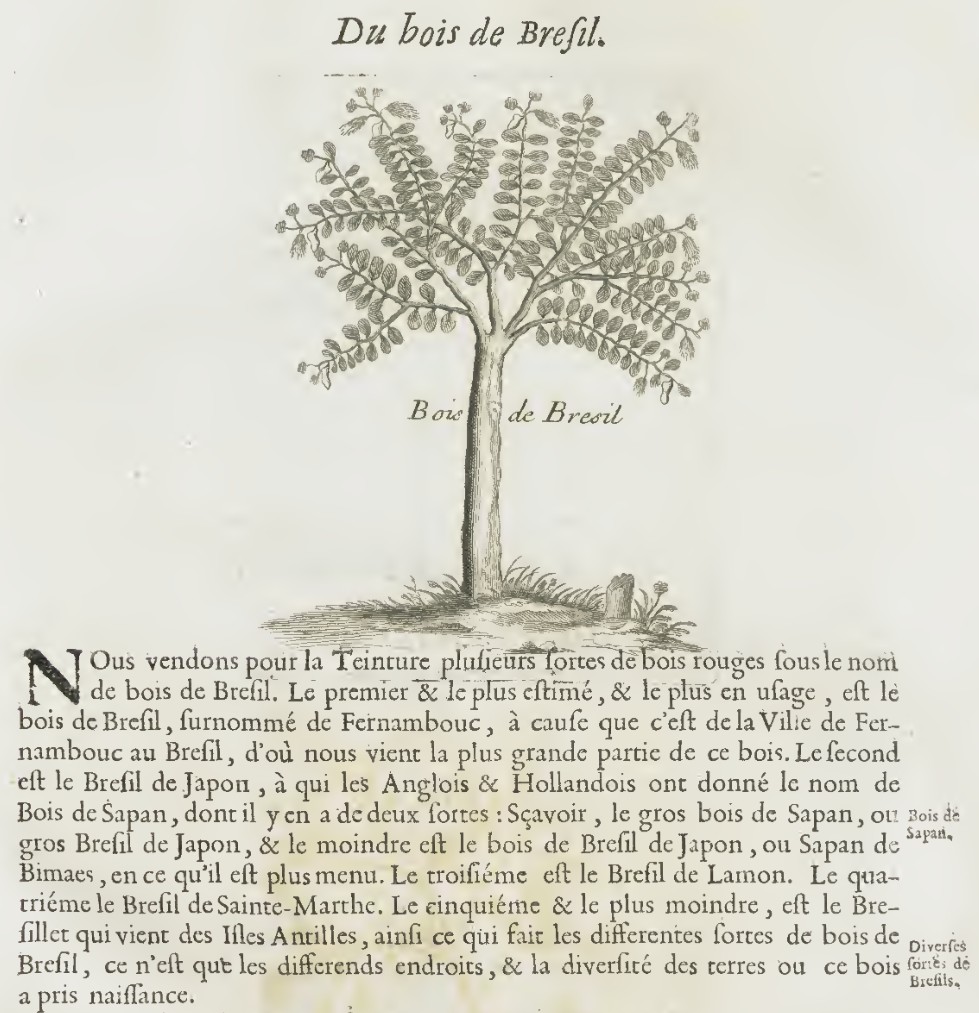
The earliest written attestation of this tangle of names dates in fact to the late seventeenth century. In his monumental Histoire générale des drogues (Paris, 1694), Pierre Pomet, chief apothecary to Louis XIV, devotes a chapter to "Bois de Bresil" in which he enumerates five distinct grades sold under that common name: the wood of Bresil surnamed Fernambouc, the coarse Bresil of Japan (also called Sapan wood) and its finer variant the Sapan de Bimaes, the Bresil de Sainte-Marthe, the Bresil de Lamon, and the Bresillet of the Antilles. The classification principle is stated explicitly:
« ce qui fait les differentes sortes de bois de Bresil, ce n'est que les differends endroits, & la diversité des terres ou ce bois a pris naissance. » ["What makes the different kinds of Brazilwood is simply the different places and variety of soils where the wood has grown."] Pierre Pomet, Histoire générale des drogues, Paris, 1694[2]
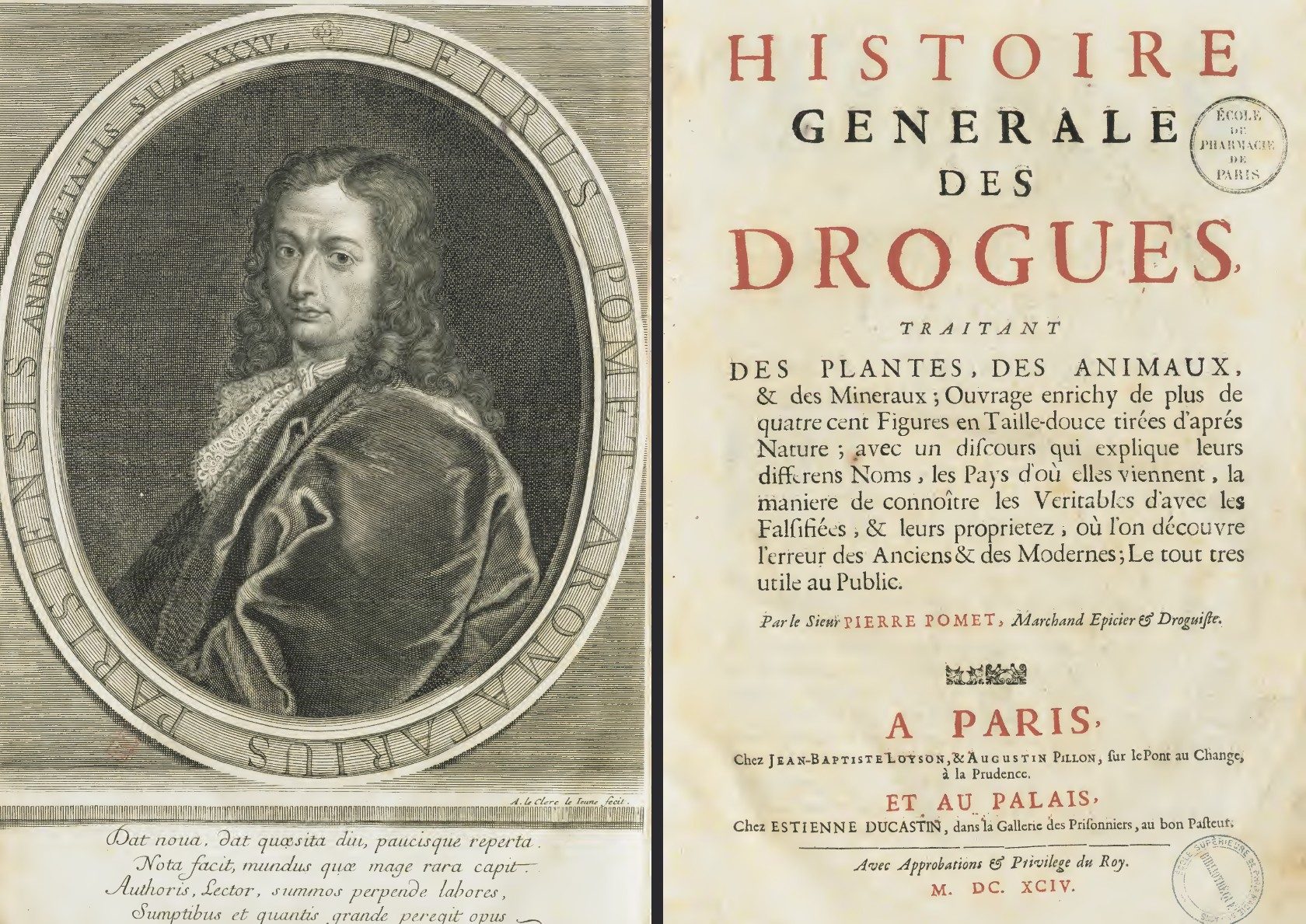
Two features of this passage deserve emphasis. First, Pomet writes as the royal Parisian apothecary describing materia medica for European pharmacy and dyeing — that is, at a node in the supply chain where, if anywhere, one might expect stable species identification — and yet treats the five grades as geographical variants of a single commercial substance, not as distinct botanical entities. Second, the geographical rather than botanical principle is articulated as early as 1694: this classification by use is therefore not a commercial expedient that emerged after Linnaeus, nor a late concession to supply difficulties — it is the original operating regime of the trade, anterior to Linnaean nomenclature itself, formulated nearly a century before Roubo (1774) and nearly two centuries before Guillaumin (1859).
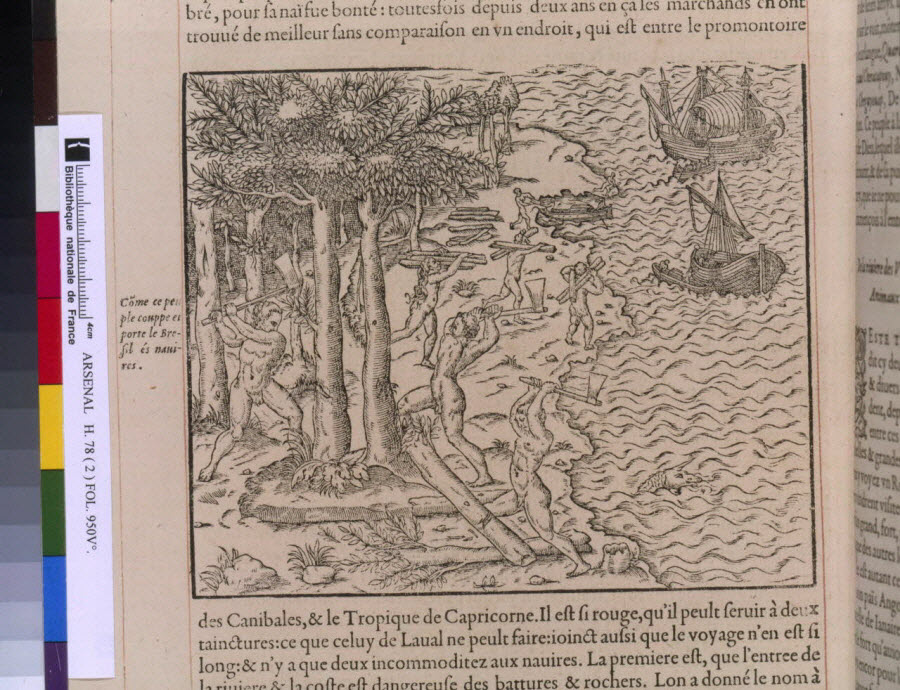
Pomet also describes two distinct quality-control moments in the supply chain. At the source, indigenous workers cut the tree at ground level and strip its sapwood so thoroughly that a trunk as wide as a man arrives in Europe reduced to the girth of a leg. At the European end, the apothecary advises buyers to choose pieces without pith — heavy, compact, sound, and free of a porous core. This selection criterion on the European side is precisely the test that Guillaumin (1859) would publish, 165 years later, as the anatomical means of distinguishing true Fernambouc from sappan. Evaluation by density and examination of the pith is not a fraud-detection method invented in the nineteenth century: it is a routine quality control already applied by apothecaries at the end of the seventeenth.
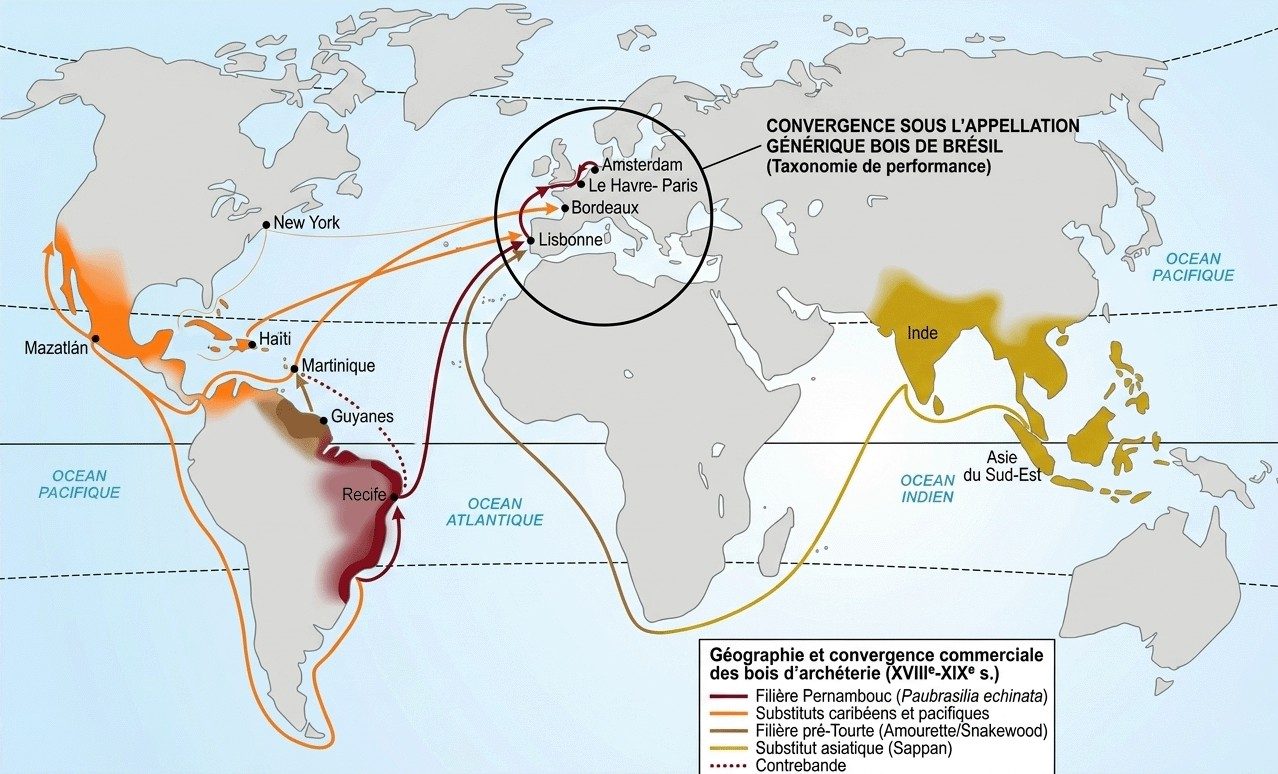
Pomet writes from the receiving end of a global supply chain whose architecture — Portuguese extraction on the Brazilian coast, Dutch and British transport from East Asia, Spanish and French supply from the Caribbean — had by the late seventeenth century already grouped under a single generic commercial appellation multiple origins from entirely separate continents. The apothecary's choice to classify wood by observable physical characteristics was not a want of botanical curiosity; it was the only viable empirical test at the European end of a multi-stage logistics chain whose successive relays progressively erased the precise provenance of the woods.
More remarkable still, this variability of appellations was explicitly acknowledged by practitioners themselves. In L'Art du menuisier ébéniste (1774), André-Jacob Roubo, a master Parisian joiner, describes forty-eight exotic species and concedes without equivocation the limits of this nomenclature:
« Il se pouroit très-bien faire... que les mêmes sujets diffèrent quelquefois dans leurs différentes parties, ce qui a sûrement fait donner plusieurs noms à des bois qui peut-être viennent d'une même espèce d'arbre. » ["It could very well be... that the same specimens sometimes differ in their various parts, which has surely led to the giving of several names to woods that perhaps come from the same species of tree."] André-Jacob Roubo, L'Art du menuisier ébéniste, Paris, 1774
This observation, formulated by a leading craftsman on the eve of the European adoption of pernambuco by Tourte, is of capital importance: it attests that the multiplicity of commercial names for a single species — or conversely, the convergence under a single name of several taxa — was a recognised fact of workshop practice in 1774, sixty-five years before the Encyclopédie du commerçant made the same observation (1839, art. Blanqui & Garnier) and eighty-five years before the Dictionnaire universel du commerce (1859). Four primary sources spanning nearly two centuries thus agree on the same diagnosis, formulated respectively by an apothecary (Pomet, 1694), a craftsman (Roubo, 1774), a commercial encyclopaedist (Encyclopédie du commerçant, 1839), and a trade reference dictionary (Dictionnaire universel, 1859): precise botanical identification of exotic timbers was neither practically applicable nor definitively established in the commerce of their time. In concrete terms, this means that the bow-maker of the period bought his wood on criteria that never mentioned species: a colour, a density, a commercial grade, a port of origin.
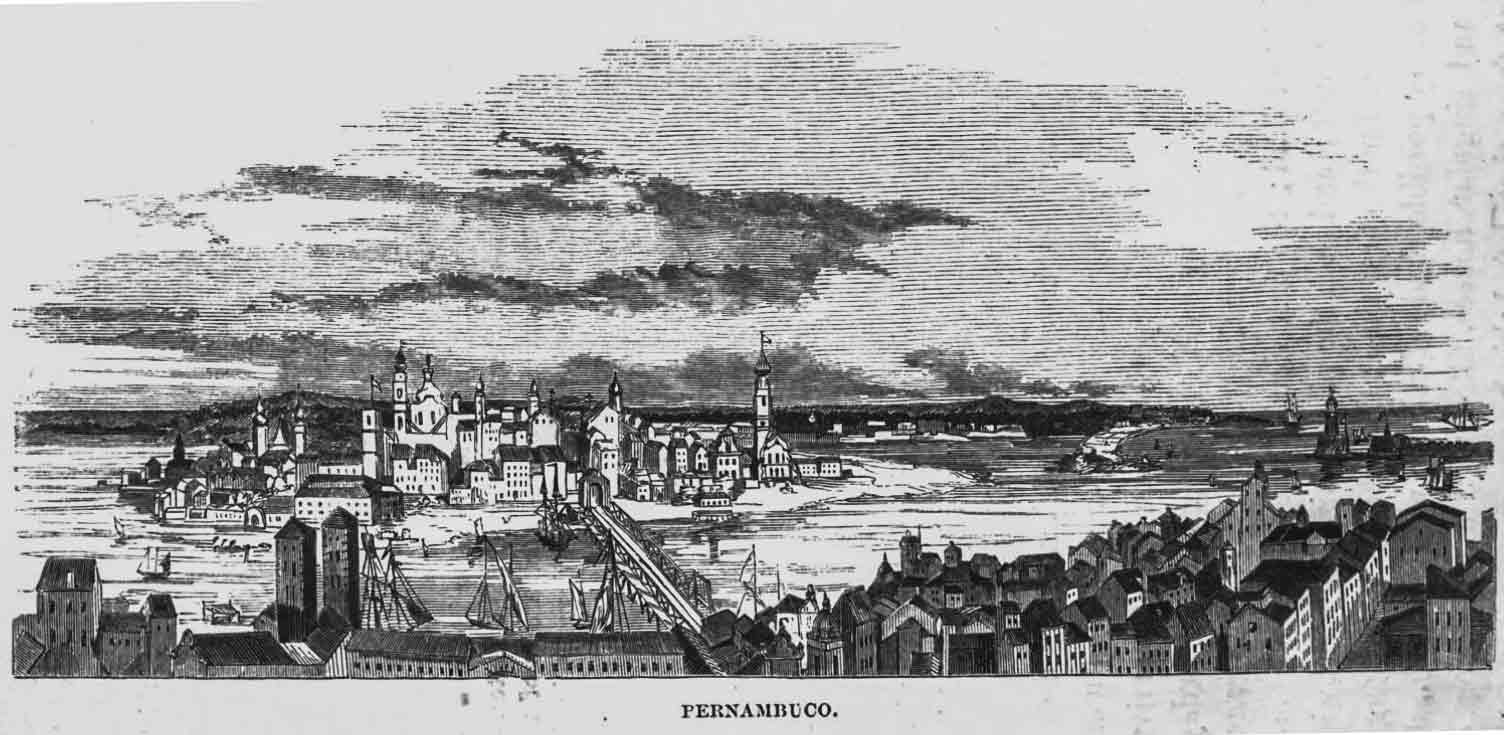
The same diagnosis finds independent echo in English-language commercial publications of the period. In his geographical and economic work Brazil, the River Plate, and the Falkland Islands (London, 1854), William Hadfield — long resident in Brazil and secretary of the South American and General Steam Navigation Company — devotes a passage to Brazilwood, the dyewood from which the country takes its name. The generic term he employs operates according to the same logic as the French commercial classification already cited: "Brazil, as before stated, takes its name from its precious dyewood, known as Braziletto or 'Cisaljuna [sic] Braziletto,' or Pernambuco, Bois de Sainte-Marthe, or Sipan, according to the place which produces it, and by Linnaeus, Cæsalpinia custa [sic]."
Four observations follow.
First, the formal criterion of differentiation is again geographical origin — "according to the place which produces it" — and the names enumerated almost exactly overlap with Pomet's five grades of 1694 and Guillaumin's price scale of 1859. The French and English commercial reference works of the eighteenth and nineteenth centuries operated, in this respect, on a single shared nomenclature.
Second, the state of the Latin botanical names in Hadfield's text is itself revealing. "Cisaljuna" is a major distortion of Caesalpinia, and "custa" of crista — the period misattribution already discussed in relation to Fourcroy. These distortions appear in the 1854 printed edition itself: the fact that a major English-language reference work circulated Latin binomials in degraded form reveals how little rigour was accorded to botanical identification in that milieu. It is decorative, gestural — an appeal to scientific authority that is not itself subjected to scientific verification.
Third, Hadfield writes that Brazilwood was at the source of "famous Turkey red colours." Turkey red designated in dyeing practice a brilliant red obtained chiefly from madder (Rubia tinctorum), but dyers frequently added Brazilwood to intensify or modulate the hue — a use attested in several eighteenth-century dyeing manuals. Hadfield, as secretary of a navigation company, probably did not have this precision in mind: for him, Brazilwood and Turkey red merged into the same category of "famous reds." This visual equivalence — two distinct products fused under the same label because they produce a similar chromatic result — is itself an illustration of the classification-by-use that this essay describes.
Fourth, Hadfield documents the post-1840 collapse in demand for Brazilwood in terms that directly support the substitution thesis of this essay: "other drugs having been substituted, Brazil wood became comparatively little used." Hadfield does not theorise substitution as a historiographical hypothesis; he reports it as a market behaviour observed two decades before his publication.
This habit of grouping very different species under a single trade name finds striking confirmation in the Diccionario de los diversos nombres vulgares de muchas plantas usuales o notables del antiguo y nuevo mundo by Miguel Colmeiro (Madrid, 1871) — the reference work of the botanist who directed the Royal Botanic Garden of Madrid. Under the entry "Palo Brasil ó Brasilete," Colmeiro lists no fewer than seven species belonging to three distinct genera, distributed across the Caribbean, South America, and Asia: Caesalpinia crista L. (Cuba), C. brasiliensis L. and C. echinata Lam. (Antilles), C. brasiliensis L., C. crista L., and C. bijuga Sw. (Jamaica), C. sappan L. (India), Poinciana insignis H.B. & Kunth (New Granada), and Coulteria tinctoria H.B. & Kunth (Popayán). Caesalpinia echinata Lam. also appears separately under the dedicated entry "Palo de Fernambuco" on the following page — so that the same species figures both as a member of the generic category "Palo Brasil" and as a distinct premium grade. Vernacular versatility outmanoeuvres the taxonomist on his own ground.
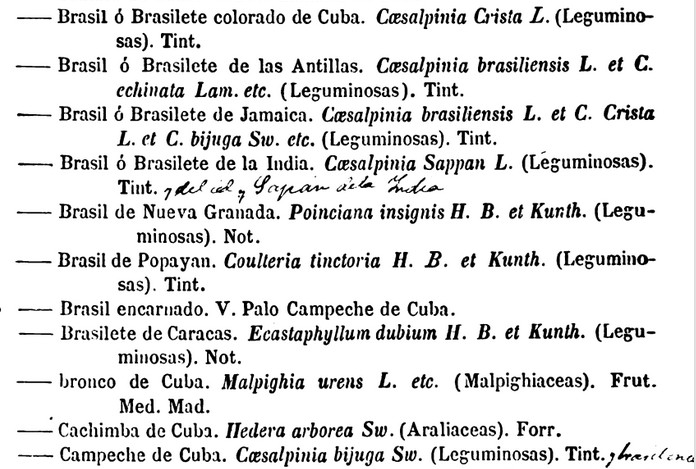
Two aspects of this entry deserve emphasis for the argument that follows. On the one hand, Colmeiro attempts, as a good botanist, to qualify the woods by geographical origin — "from Cuba," "from Jamaica," "from Popayán," "from Nueva Granada" — and the presence under "Palo Brasil" of Coulteria tinctoria H.B. & Kunth, from Popayán (present-day Colombia), is directly telling: Coulteria is precisely the genus into which Caesalpinia platyloba was reclassified. What the botanist records here is that a species of the genus Coulteria circulated under the appellation "Palo Brasil" in the nineteenth-century Hispanic-American trade. On the other hand, the vernacular slippage between the two major genera of red dyewood is explicitly documented: "Palo Campeche de Cuba" refers to Caesalpinia bijuga Sw. — meaning that a Cuban Caesalpinia was sold under the name "Campeche," which in standard nomenclature designates Haematoxylum campechianum. This essay has posited such overlaps; Colmeiro attests them in plain terms, at the very level of reference botanical nomenclature.
It must be emphasised, however, what Colmeiro does not establish. He is a botanist, and he is drawing up a learned nomenclature; what he documents is the attempt at botanico-geographical qualification of a commercial object that circulated, at the same moment, under far more fluid appellations among the French quayside traders (Guillaumin, 1859), and then under purely invented names in the bow-making workshops themselves (the Mirecourt bois d'abeille has neither geographical nor botanical referent). The further down the chain of intermediaries one moves from the extraction zone to the bow-maker's bench, the more the performance-taxonomy dimension intensifies at the expense of any stable geographical traceability. Colmeiro illuminates the botanical level of this chain; he does not illuminate the commercial level, still less the workshop level.
The Absence of Traceability: a Historical Norm, not an Exception
This variability of appellations is a structural fact found throughout the raw-material supply chains of the period. The economic actor of the nineteenth century — whether merchant, timber cutter, or dyer — had neither the tools, the obligation, nor even the need to distinguish botanically between two woods that produced a similar shade of red in the vat.
This reality is not peculiar to dyewoods. It characterises all natural raw materials of the period: spices, resins, oils, vegetable fibres. Fine botanical distinction was the province of naturalists' cabinets, not of the unloading quay.
The Case of Ebony
The case of ebony illustrates the antiquity of this taxonomy of performance: since Antiquity, the term "ebony" has not designated a species but a visual and mechanical property — a dense, black wood suited to polishing. The Egyptians already applied it to several distinct species from Africa and Asia. The Romans did likewise, depending on the available trade routes. In the seventeenth century, when the Gulf of Guinea trade organised itself into a structured supply chain, it was chiefly Diospyros crassiflora from Central Africa that constituted it, not Madagascan ebony, whose integration into international commerce came far later.
In 1800, Madagascan ebony already circulated via Indian Ocean trading posts, but without precise botanical identification or systematic commercial distinction from African or Asian ebonies: the market bought dense black wood, regardless of species, regardless of continent. The fine taxonomic identification of Madagascan Diospyros and their industrial-scale exploitation are phenomena of the twentieth and especially the twenty-first century. The taxonomic ambiguity of ebony is not five years old, nor fifty: it is five thousand years old. What our CITES regulations are today attempting to correct is a commercial habit as old as writing itself.
This lack of precision should not be seen as a bygone anomaly. Contemporary luthiers sourcing ebony from wholesalers often receive no precise information on the exact botanical or geographical origin of their wood. A stock presented under the generic label "ebony" may contain, indifferently, Diospyros crassiflora (Gabon ebony), Diospyros ebenum (Ceylon ebony), or Diospyros perrieri (Madagascar ebony). Even when purchasing in good faith, the professional typically receives no documented information allowing them to know whether their stock accumulated over the past thirty years originates from Madagascar or another source — and this despite the existence of CITES regulations. If this indeterminacy persists today, with modern traceability tools and growing legal obligations, it would be illusory to suppose that a higher degree of precision existed in the nineteenth century.
This taxonomic silence surrounding ebony creates a revealing paradox in contemporary authentication practice. While regulatory and documentary attention focuses heavily on the species of the bow stick (Paubrasilia echinata), the frog structurally associated with it often remains described under the sole commercial appellation "ebony." Yet this term covers a plurality of Diospyros species spread across several continents, some of which today carry strict protections, notably in Madagascar. In practice, a CITES certificate may thus identify the stick's species with precision while not documenting the wood used for the frog, which remains simply "ebony." This asymmetry does not stem from any difficulty of analysis — the frog could be examined like any sample — but from an asymmetry of attention: one does not look at what is not regulatorily at stake. This two-speed treatment directly extends the logics described in this essay: taxonomic precision tends to sharpen for materials that have become critical or regulatorily sensitive, while others continue to circulate under historically stabilised commercial categories.[4]
The Historical Priority of Caesalpinia sappan
The variability of the appellation "Brazilwood" is particularly well illuminated by the evolution of the name given to Caesalpinia sappan. Before the sixteenth century, medieval Europe already consumed vast quantities of "bois de brésil" (braxilis) imported from Asia via the Silk Road and Levantine routes. The name itself is a performance descriptor: the Portuguese "brasil" derives from "brasa" (live embers), designating the fire-like red colour of the heartwood — the property merchants were purchasing — and not any botanical characteristic of the tree (H.-G. Richter, personal communication, May 2026). This trade rested exclusively on C. sappan. It was only by chemical analogy that the name was belatedly transferred to the red woods found in America; and it is from the abundance of this "bois de brésil" on the Atlantic coast that the country itself took its name — the territory was named after the commodity, not the reverse.
In the nineteenth century, faced with the exhaustion of Brazilian forests, the market simply reactivated its centuries-old reflexes of substitution: Asian C. sappan and species from the Mexican Pacific again crossed paths on Western trading counters under the same centuries-old vernacular banner. To wish to distinguish these flows is to ignore this historical continuity: merchants were not buying a geographical provenance; they were buying a product answering to a generic term seven centuries old.
Contemporary Chinese nomenclature offers an unexpected confirmation of this continuity in appellations. The reference term for pernambuco in the Chinese bow-wood trade is 巴西苏木 (Bāxī sūmù) — literally "sumu/sappan from Brazil." This compound is itself a linguistic fossil: 苏木 designates in classical Chinese and in the pharmacopoeia the Asian Biancaea sappan (formerly Caesalpinia sappan), precisely the brazilin-bearing red wood that Sino-Arab trade routes distributed long before Brazilian pernambuco reached Europe. When the modern Chinese trade needed to name pernambuco, it simply geo-qualified the generic term for the brazilin red wood it already knew — producing a semantic calque exactly replicating the medieval European process by which the term "Brazilwood" extended from Asian sappan to American Paubrasilia. The substitution mechanism does not change its logic; it changes its alphabet.
The contemporary use of the Chinese appellation further illustrates with precision the dual regime that has always characterised these designations. In specialised contexts (professional bow-making, expertise in antique bows, academic research), 巴西苏木 designates Brazilian pernambuco (Paubrasilia echinata), explicitly distinguished from 巴西木 ("wood from Brazil," a generic term for interchangeable dense red woods) — and some Chinese sources themselves warn against confusion between the two, attributing it to the "wordplay" of merchants. But in mass commerce, which absorbs the bulk of volumes traded, the appellation functions as a simple quality label: "pernambuco" there designates a performance promise on materials whose botanical identity is neither declared nor verifiable by the buyer.
The Institutional Architecture of Commerce: Monopolies, Smuggling, and the 1808 Reconfiguration
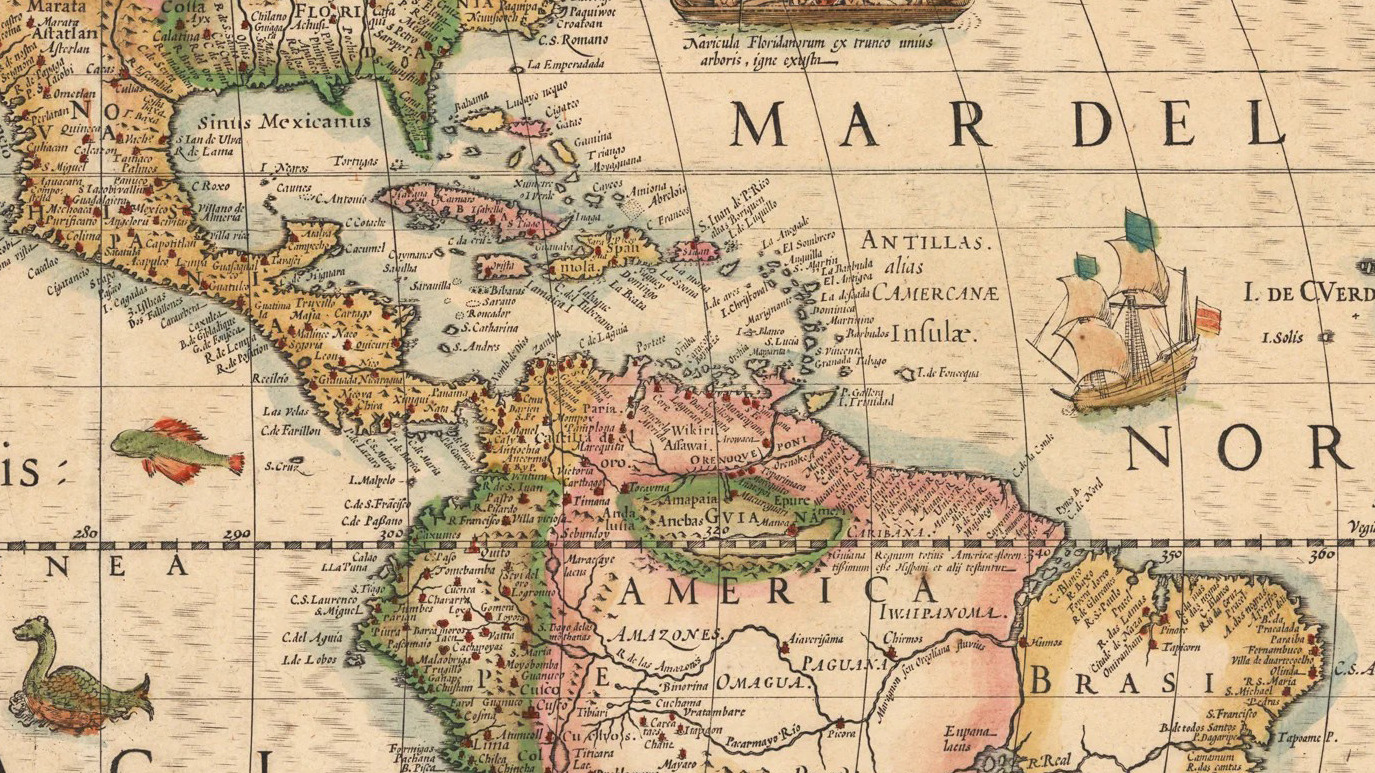
The taxonomy of performance did not operate in an institutional vacuum. It was supported — and to a significant degree produced — by a legal architecture whose central feature was the systematic separation of botanical identity and the documents that accompanied wood across borders.
The first structural feature is the long Portuguese monopoly on pau-brasil and its delegation to foreign merchant firms. From 1756 to 1784 — a period that coincides precisely with Tourte's experiments, which extended from the 1770s until after the monopoly's end — the contrato do consumo for the European retail of Brazilian Brazilwood was held by a single merchant company operating from Lisbon: the firm of David Purry, Joseph Mellish, and Gerard De Visme, which purchased wood from the Portuguese Crown warehouses at the Casa da Índia and re-exported it under fiscal exemption privileges to foreign markets (Dias, 2018). The contractual volumes were considerable: 20,000 quintais per year under the first contract (1756–1765), rising to 30,000 under the second (1766–1775), then returning to 20,000 under the third (1776–1784). Each quintal was equivalent to approximately 60 kg; the documented effective withdrawals at the Casa da Índia total some 422,131 quintais — approximately 25,000 metric tonnes — for the period 1756–1775 alone.
Assessing this logistics chain requires taking the measure of the scales involved. Against this heavy industry, whose purpose was to reduce tens of thousands of tonnes of logs into dyeing powder, the needs of instrument-making were infinitesimal: a finished bow stick weighs approximately 60 to 80 grams depending on the instrument. This disparity in the quantity of raw material consumed precisely explains why bow-makers had no economic leverage to demand botanical traceability. The Parisian bow-maker sourced from the margins of a mass industry and was, in practice, subject to the sorting and nomenclature dictated by the dyers on the quays. The botanical identity of a log was fixed — or rather left indeterminate — well before any piece reached a workshop, by a trade for which a bow stick was a negligible quantity.
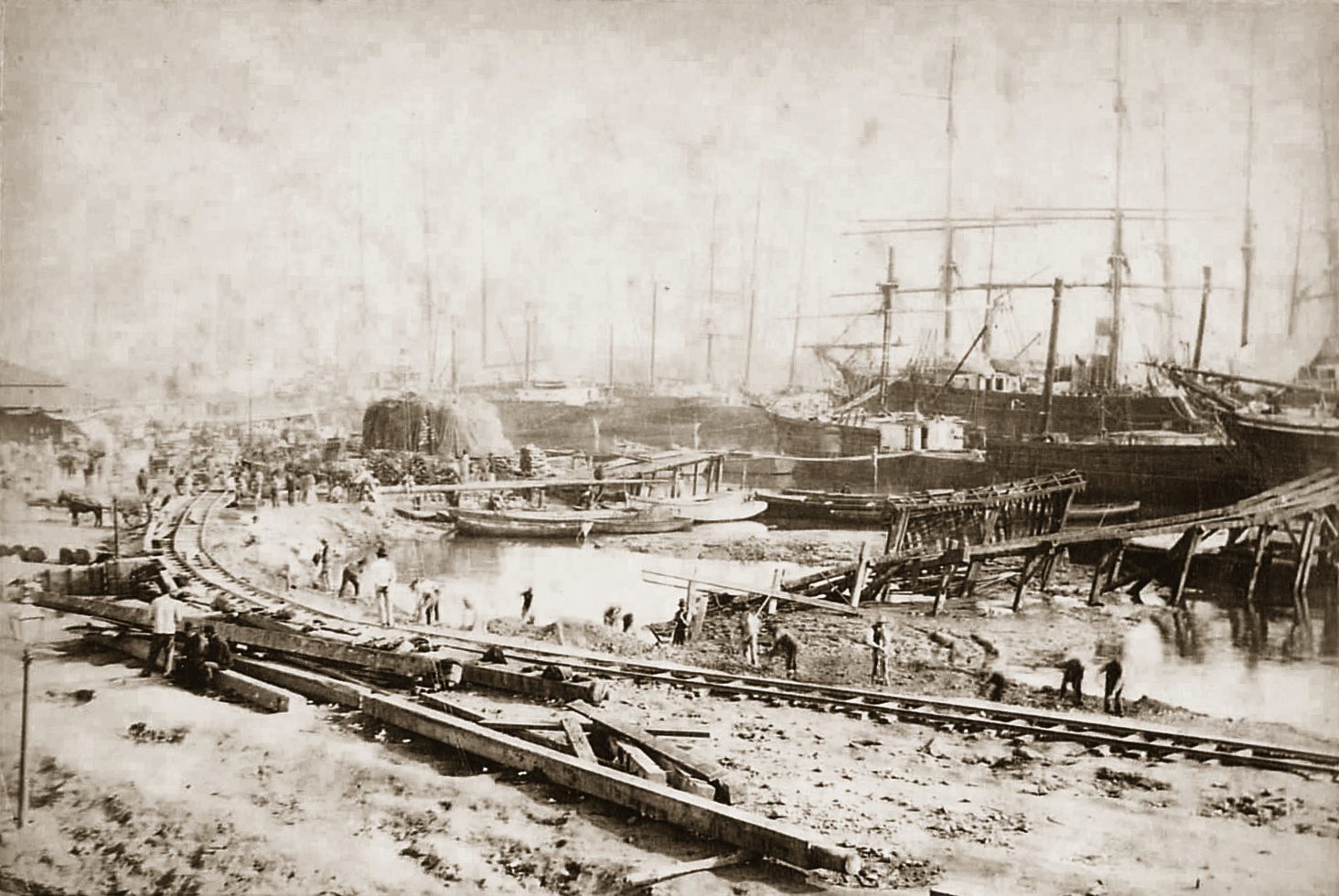
Beyond the volumes, the determining element is the complexity of the commercial itinerary. The wood was extracted in Pernambuco, transported to Recife under a separate contrato do corte, custo e condução, shipped to Lisbon under Portuguese flag, weighed and registered at the Casa da Índia, then re-exported by an English firm under fiscal exemption to foreign markets. One of the principal documented French destinations during the monopoly period was Marseille, where the firm transacted with the French merchant Isaac Tarteiron, who received and resold the wood throughout France. The wood thus crossed at least three sovereign legal regimes before reaching the dyer's vat, and the documentary chain consisted of contracts and customs declarations, not botanical identifications. Nobody in this chain had a fiscal interest in botanical precision: the Crown collected its tax by quintal of "pau-brasil," the English firm sold a category of dyeing performance, and the French dyer bought a colour.
The second structural feature is the parallel smuggling network that operated alongside the legal monopoly. Recent Brazilian research has examined documented cases of smuggling in Pernambuco for the late eighteenth century (Barbosa, 2021), the most instructive being the confession of one João Batista da Silva, who admitted to having transported pernambuco wood directly to Martinique — the French Caribbean colony — for resale. This route to Martinique did not arise from nothing: it was embedded in a commercial geography established more than a century earlier. In 1630, the Dutch had captured Pernambuco and occupied the region to take direct control of its sugar industry; after their final expulsion in 1654, waves of Dutch refugees headed for the French Antilles, carrying with them their merchant networks and their expertise in dyeing materials (Mandelblatt, 2011). Martinique thus became, well before 1785, a familiar hub for products from the Brazilian coast — making the route that João Batista was taking not a criminal improvisation, but the reactivation of a commercial circuit several generations old.
These parallel routes allowed evasion of customs. When customs records existed, they recorded in any case a commercial category — "pau-brasil," "bois de Bresil," "Fernambouc" — circulating between ports and fiscal jurisdictions, not a biological species circulating between forests and workshops. This reality is directly attested by the study of the mapas de exportação (cargo manifests) of Brazilian ports from the second half of the eighteenth century. Martins & Melo (2019), in their methodological analysis of these sources, show that timber appears systematically under generic appellations — "madeira em geral" (timber in general) — without ever specifying the species. They explicitly confirm that these documents served primarily to "prevent smuggling" and to collect fiscal revenue: "As embarcações só poderiam zarpar dos portos coloniais depois de emitidos tais mapas, para que assim se evitasse o contrabando." The purpose of these archives was therefore fiscal, not botanical — and their taxonomic silence is structural, not accidental.
The third structural feature is the institutional reconfiguration of 1808. Napoleon's invasion of Portugal drove the Portuguese royal court across the Atlantic; on arrival, the Prince Regent signed the Decreto de Abertura dos Portos às Nações Amigas (28 January 1808), dissolving the pacto colonial that had channelled all Brazilian commerce through Lisbon. It is important to note that France, as the invading power, was not among the "friendly nations" targeted by this decree: its immediate beneficiaries were above all the British, who had escorted the court to Brazil (Crouzet, 1990). It was only after the fall of Napoleon and the Bourbon Restoration of 1814–1815 that direct commercial routes opened between Brazilian ports and French Atlantic ports. The study by Bruna Iglezias Motta Dourado on the grosso trato commerce at Recife between 1837 and 1871 records seventeen French vessels and approximately 3,541 tonnes of cargo imported at Recife for the period 1842–45 — approximately 6.5% of the 261 vessels and 54,129 tonnes entering the port during those years, with British shipping continuing to dominate at 36%.
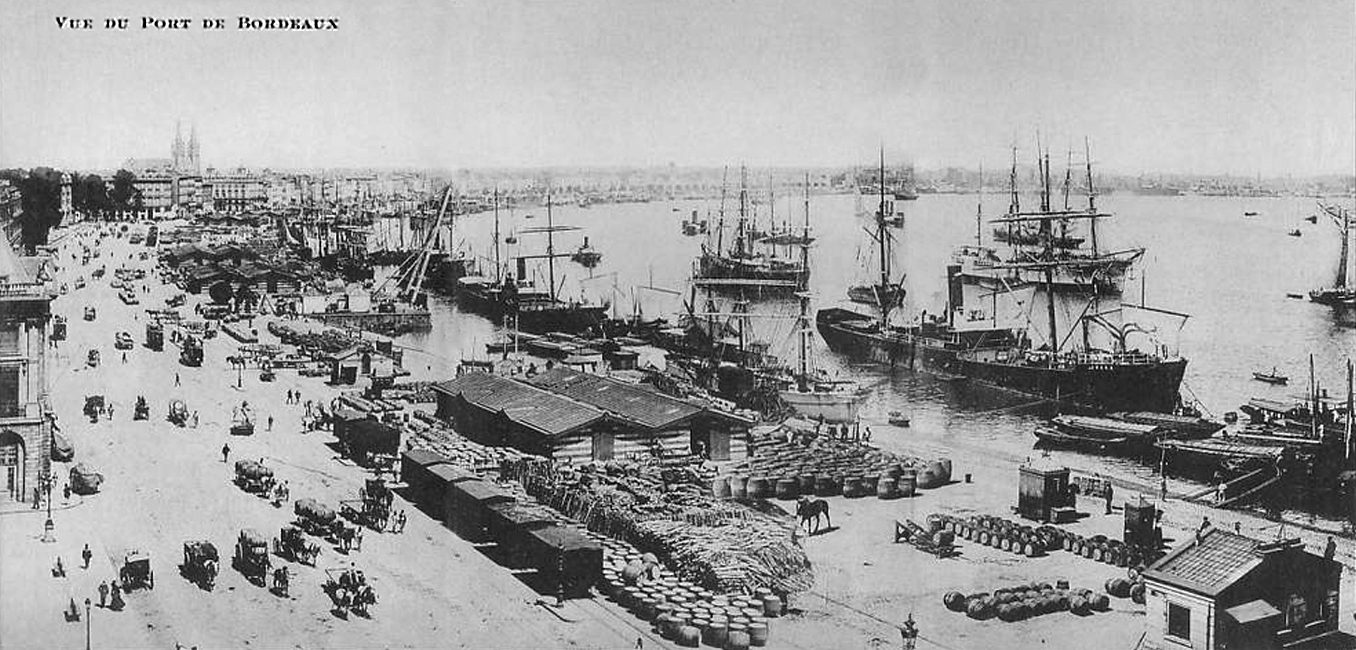
The French side of this commerce has been documented primarily for Le Havre, which, over the nineteenth century, consolidated its position as the main French entry port for colonial timbers. Claude Malon's history of colonial Le Havre (2006) records dyewoods among the port's incoming cargoes from 1815 onwards — chiefly logwood from Haiti and the Caribbean, alongside ebony and mahogany — and explicitly notes that confusion between dyewoods and cabinet-making woods was "frequent" even in professional literature.
When the immediate successors of Tourte purchased pernambuco wood from Parisian commission merchants in the 1810s and 1820s, they depended on a Franco-Brazilian supply chain recently opened — direct for less than a decade — but resting on ancient, opaque merchant networks, and continuing to use the same vocabulary of performance taxonomy that Pomet had described in 1694. The institutional rupture of 1808 reorganised the routes and the actors; it did not introduce a new descriptive language for the commodity itself. Nor did it cause Tourte's adoption of pernambuco: his experiments predated it, situated in the 1770s–1800s. What the opening of the ports did was to flood the European market with Brazilian goods at the very moment when the modern bow was finding its definitive form, facilitating the mass supply of a craft in full technical transition. Geopolitics did not create the choice; it lowered the cost and widened the channel, to the benefit of a wood that workshops had already begun to prefer.
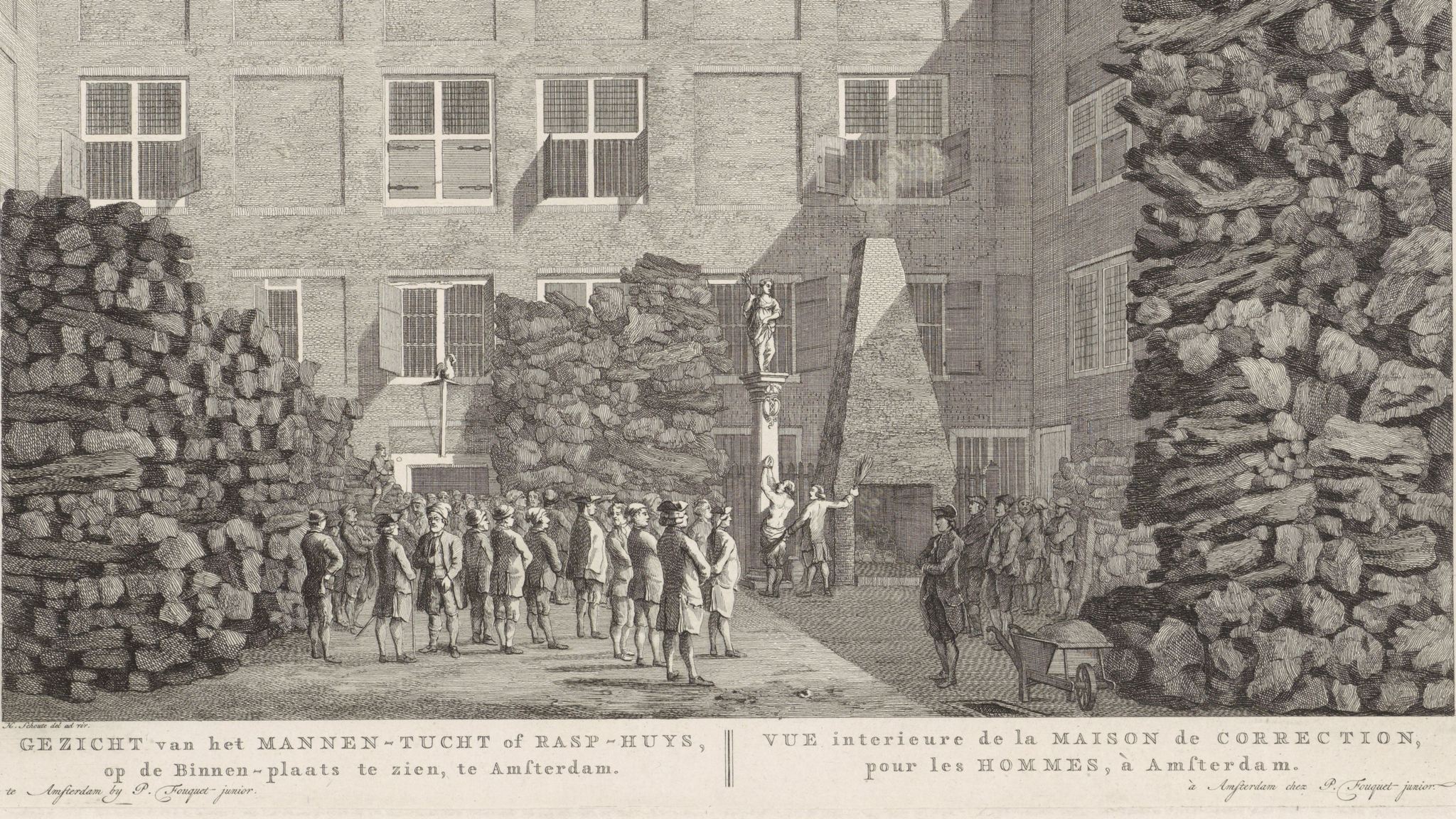
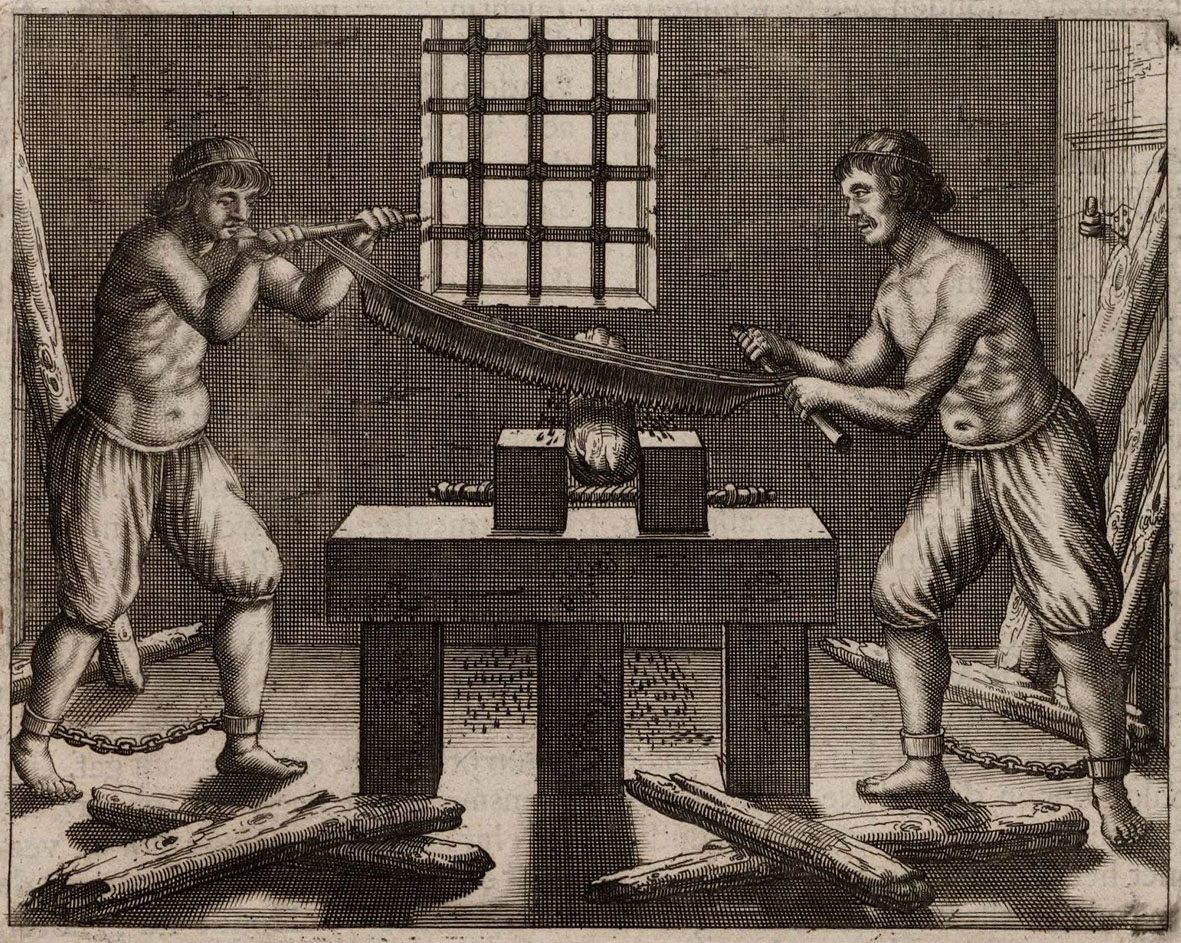
The industrial Brazilwood supply chain, long established and well organised, possessed a state monopoly apparatus that was matched, at the other end of the chain, by an equally state-regulated processing centre: the Rasphuis of Amsterdam. This house of correction, founded in 1596, had held since 1599 the exclusive right to rasp Brazilwood for the city, a right extended in 1602 by the States General to all of Holland and Western Friesland, with the monopoly on the export of the dyeing powder thus obtained. The English physician Edward Browne, passing through Amsterdam in 1668, left a striking testimony: the inmates forced to rasp the wood, he writes, worked naked and sweating, Brazil dust flying over them to the point that they were "all over painted of a beautiful red colour" (Browne, 1685, p. 97). Browne immediately adds that recalcitrant inmates who refused to work were placed in a large cistern into which water was made to rise, a pump being placed at their disposal as their sole means of escape — compelled to pump in order to survive. This description, which follows immediately upon the rasping scene, reveals the systematic coercive logic of the Rasphuis: Brazilwood was not merely an industrial raw material, it was the instrument of a discipline through forced labour, whose violence ranged from the daily task to the threat of drowning. The dyeing performance of the wood — the red it releases — inscribes itself here literally on the bodies of the men who reduce it to powder. As the luthier and historian Benjamin Hebbert points out, this world of Dutch Brazilwood processing constitutes one of the least explored milestones in the prehistory of bow wood; but one must guard against any presumed continuity: nothing establishes a documented link between this Amsterdam nexus of the sixteenth and seventeenth centuries and the Parisian supply of Tourte at the end of the eighteenth. The Rasphuis attests to the depth and antiquity of the Brazilwood processing infrastructure; it does not attest to an unbroken supply chain extending to the modern bow.
The historical sources capable of empirically documenting this supply chain remain to be explored: Mexican maritime customs records (Archivo General de la Nación, Ramo de Aduanas, ports of Mazatlán and San Blas), the registers of European dyehouses and the port customs of Bordeaux and Le Havre (Archives départementales de la Gironde and de la Seine-Maritime), and, on the Brazilian side, the records of the Recife grosso trato held at the Arquivo Público Estadual Jordão Emerenciano. Three bodies of modern scholarship already map the framework: Paul Butel's studies on Bordeaux merchant networks, Claude Malon's work on colonial Le Havre, and Bruna Iglezias Motta Dourado's research on the maritime commerce of Recife (1837–1871), which measures French participation in the port (some 17 vessels and 3,500 tonnes for 1842–45, out of 261 vessels and 54,129 tonnes recorded). The most promising study — cross-referencing outbound manifests from Recife with inbound registers at Bordeaux and Le Havre — has not, to our knowledge, yet been conducted.
Notes
Sources — Part I
Primary Sources
Pomet, Pierre, Histoire générale des drogues (Paris, 1694). — Roubo, André-Jacob, L'Art du menuisier ébéniste (Paris, 1774). — Thevet, André, Cosmographie universelle (Paris, 1575). — Browne, Edward, A Brief Account of some Travels (London, 1685). — Fourcroy, Antoine-François, Système des connaissances chimiques (Paris, 1800). — Girardin, Jean-Pierre, Leçons de chimie élémentaire, 4th ed. (1877). — Beauverie, Jean-Jules, Les bois industriels (1910).
Secondary Sources
Dapson, R.W. and Bain, C.L., "Brazilwood, Sappanwood, Brazilin and the Red Dye Braziléin" (2015). — Dias, Thiago Alves, O negócio do pau-brasil (2018). — Marichal, C. and Pretel, D. (eds.), Colours, Commodities and the Birth of Globalization (2024). — Normand, Didier, "Le commerce des bois d'Amérique tropicale" (1992). — Martins & Melo (2019), analysis of the mapas de exportação. — Rocha, Presotto & Cavalheiro (2007), representation of C. echinata in colonial maps.
Part II
The Mexican Case and the Mechanisms of Substitution
From Mazatlán to Paris — how Coulteria platyloba (Chakté Viga), bois d'abeille, and Caribbean woods circulated under generic names; how commission merchants graded wood without ever durably fixing the botanical identity of what they traded.
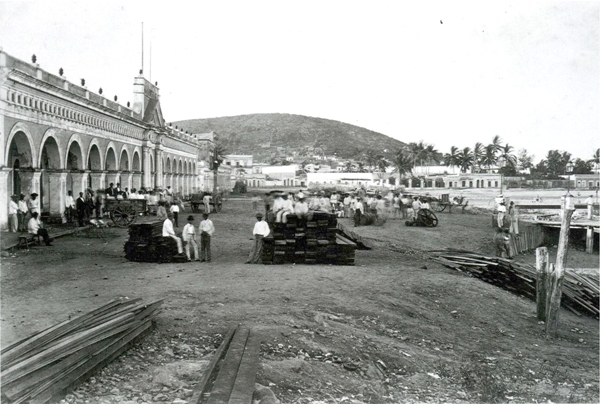
In the framework of the global history of dyes, the collective volume edited by Marichal and Pretel (2024) invites exploration of "secondary dyeing economies" and peripheral extraction zones. By the early nineteenth century, the reserves of Paubrasilia echinata on the Brazilian Atlantic coast were already massively depleted, and the economic incentives to find accessible substitutes were at their maximum.
It is historically attested that the Mexican Pacific coast actively responded to this demand. Haematoxylum brasiletto (Palo de Brasil) was exploited in the dry forests of Sinaloa and Sonora and exported via hubs such as Mazatlán.
This is where the case of Caesalpinia platyloba, or Coulteria platyloba (known by the vernacular names Chakté Viga, Palo Colorado, or Paela), becomes relevant. This tree, with its yellow-orange to brown-orange heartwood, shares the same dry-forest zones of Mexico and Central America. It illustrates the dynamics of substitution: even if customs archives rarely mention this taxon by name, its integration under generic commercial labels (such as "palo de brasil") is entirely consistent with the structure of the trade.
What follows examines the conditions under which C. platyloba could plausibly have integrated into these flows. The question is not whether its presence can be documented — the archives, by their very nature, cannot answer that — but whether the commercial, ecological, and logistical conditions were such that its exclusion would itself require explanation. The argument that follows is therefore one of structural inference, not empirical demonstration, and the reader should hold it as such throughout this section.
Endowed with a heartwood rich in red pigments and a remarkable density (between 0.89 and 1.02 g/cm³, according to the CITESwoodID database, Richter & Dallwitz), C. platyloba (locally named Palo Colorado) lent itself organically to simultaneous harvesting alongside H. brasiletto. For the timber cutters and local intermediaries connected to export markets, the fine distinction between two trees producing a similar shade of red at the cut had no economic or practical reality.
This indifference was not fraudulent: it flowed naturally from the taxonomy of performance. The incidental or deliberate inclusion of C. platyloba in cargoes of braziletto or palo de brasil bound for Europe or San Francisco fits squarely within this logic, where only dyeing equivalence mattered. Here, substituting is not deceiving: it is satisfying the operational definition of the product as it existed at the time.
The inclusion of C. platyloba in historical Mexican cargoes remains a logical deduction, in the absence of direct archival evidence. It would be refuted by the discovery of customs manifests or dyers' records capable of formally distinguishing this wood from its cousins — yet commercial archives show precisely the opposite: merchants classified their woods by colour and dyeing yield, without recourse to stable botanical taxonomy. What is advanced here is therefore a matter of historical probability within a commercial system organised around use and performance, without any direct archival proof being available.
The Limits of Visual Identification
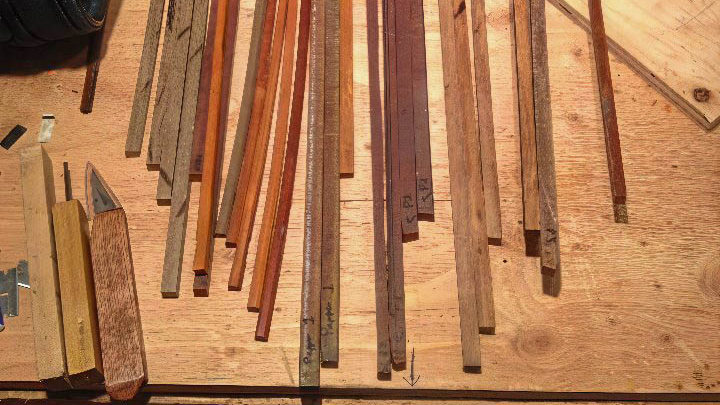
A phenomenon documented in the specialist literature further complicates any attempt at visual identification: the internal variability of Paubrasilia echinata is itself considerable. Modern science has demonstrated that the appearance of true pernambuco varies according to the conditions under which the tree grew. The age of the tree, its sun exposure, and the region of Brazil where it grew — from north to south — measurably alter the wood's density, vessel size, and chemical composition (Macedo et al., 2019; Zani, 2014). And forensic isotopic analysis — notably the strontium isotopic fingerprinting protocol developed for determining geographical origin within Brazil — has been shown, according to the abstract of Kafino et al. (2024, Science & Justice, PMID 38431373), to leave a chemically measurable signature in the wood itself. [Paper available under restricted access; only the abstract was consulted.]
The variability of P. echinata is now broadly demonstrated by independent methodological approaches: the range of pale orange, dense reddish-brown, and deep brownish-violet pieces visible in the photomontage below is consistent with genuine biological and environmental variability within a single species. This same variability forecloses any attempt to use simple visual or tactile criteria as taxonomic markers: a pale, less dense piece of P. echinata from a younger tree on poorer soil may be, under workshop conditions, visually and mechanically indistinguishable from a dense piece of Caesalpinia platyloba or C. sappan. The botanist's tools (microscopy, spectrometry, isotopic analysis) can in principle resolve these cases, but they are largely inapplicable to a finished, varnished bow without destructive sampling. The strontium isotopic protocol in particular illustrates the limits of contemporary methods: it can determine geographical origin within Brazil with measurable precision, but it has no purchase on the substitutes themselves — Mexican, Caribbean, and Central American Caesalpinioideae — whose possible presence in the historical commercial supply constitutes the underlying problem this essay examines.
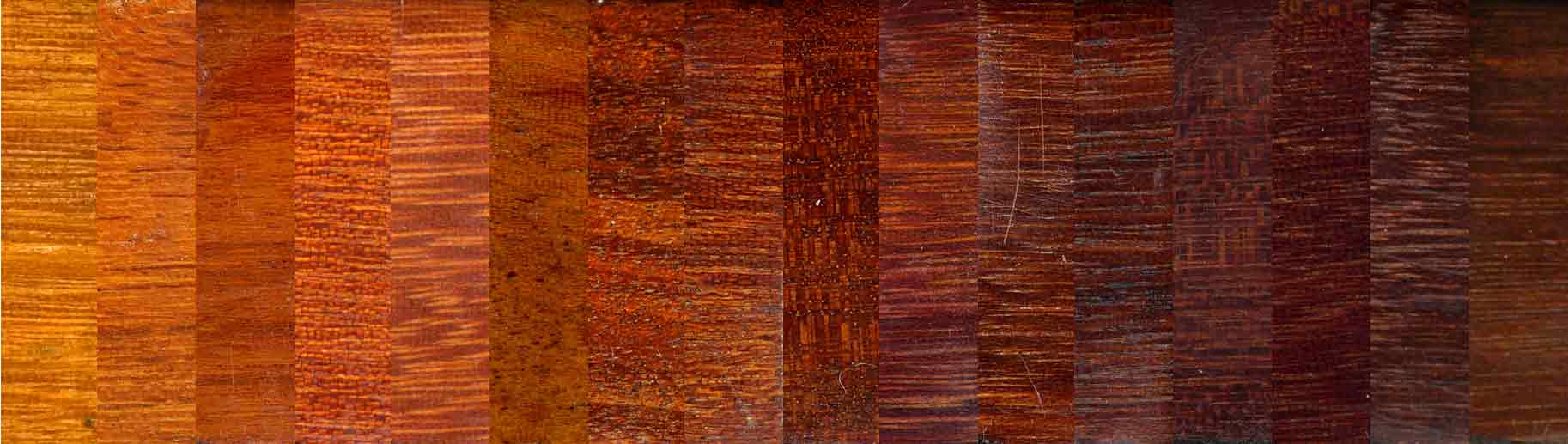
This variability is directly perceptible to the naked eye. Pieces marketed in good faith under the name pernambuco exhibit visibly wider pores, a different apparent density, or less intense colour — characteristics that lead experienced practitioners to suspect a different botanical identity. The hypothesis that some of these "atypical" woods historically marketed as pernambuco actually belong to other dense-wooded Caesalpinioideae involuntarily integrated into the supply chain through harvesting or labelling confusion is not merely plausible: it is consistent with all the structural dynamics described here.
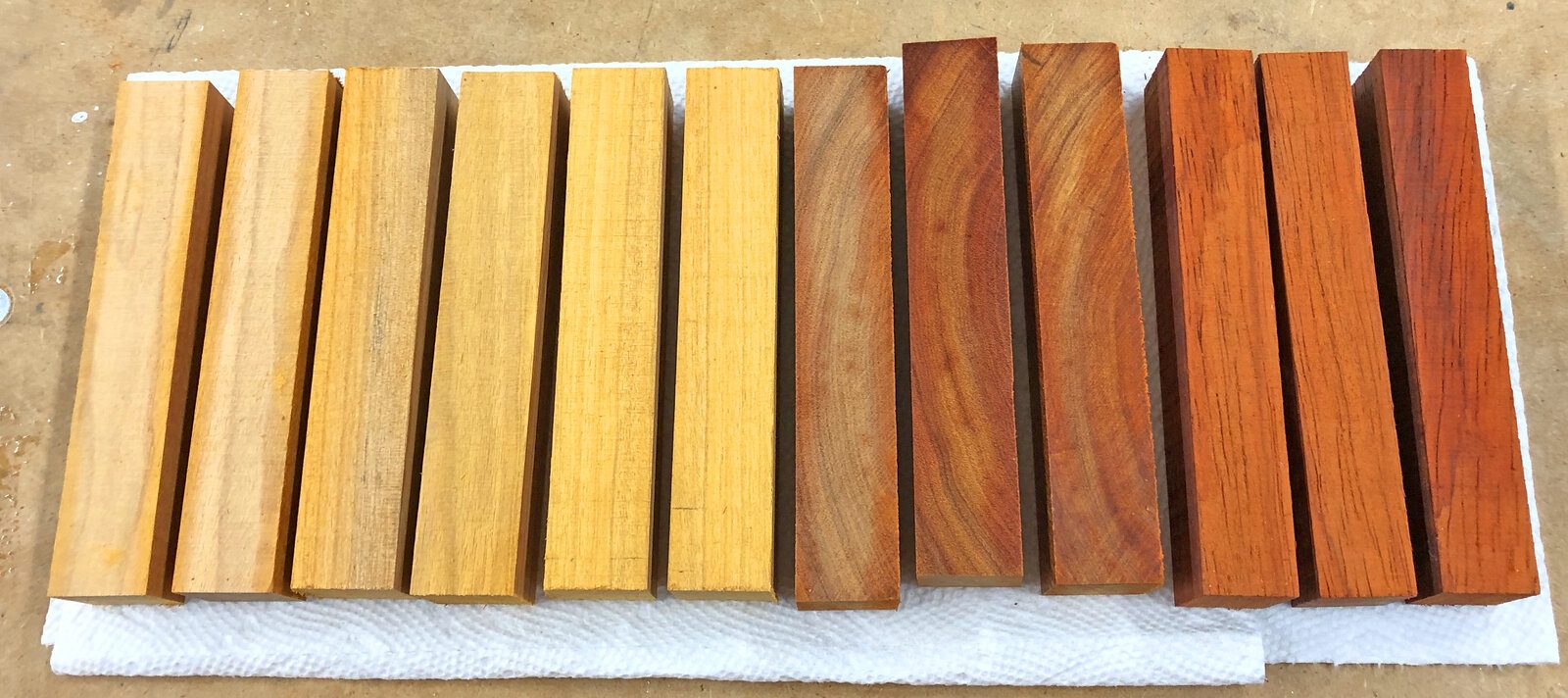
This observation is not only that of an outside observer. The xylologist H.-G. Richter, co-author of the CITESwoodID database, emphasises that wood colour is among the least reliable properties for identification, so dependent is it on light, surface age, and oxidation (H.-G. Richter, personal communication, 22 May 2026). The observation is weighty for this essay's argument: the criterion on which the commercial sorting of red woods precisely rested — colour at the cut — is, from the standpoint of contemporary identification science, one of the most misleading that exists. The taxonomy of performance did not rely on a proxy for want of something better while awaiting science: it relied on the very index that modern science judges the least discriminating of all.
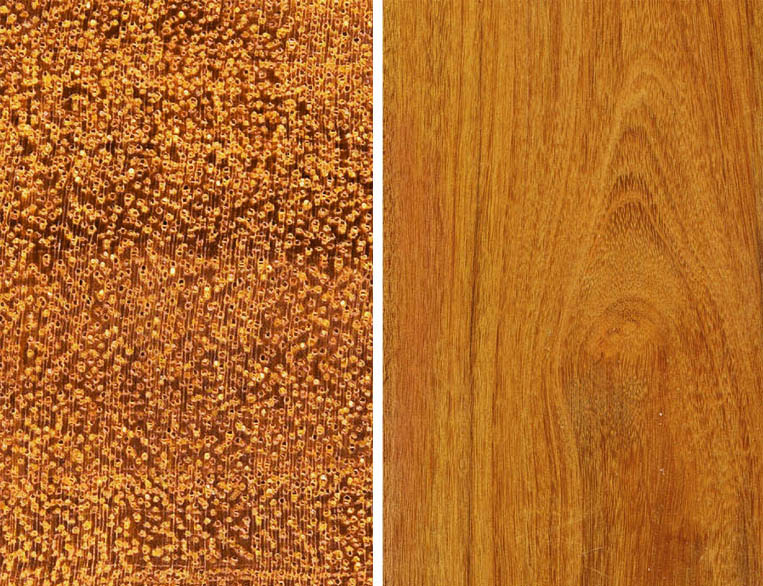
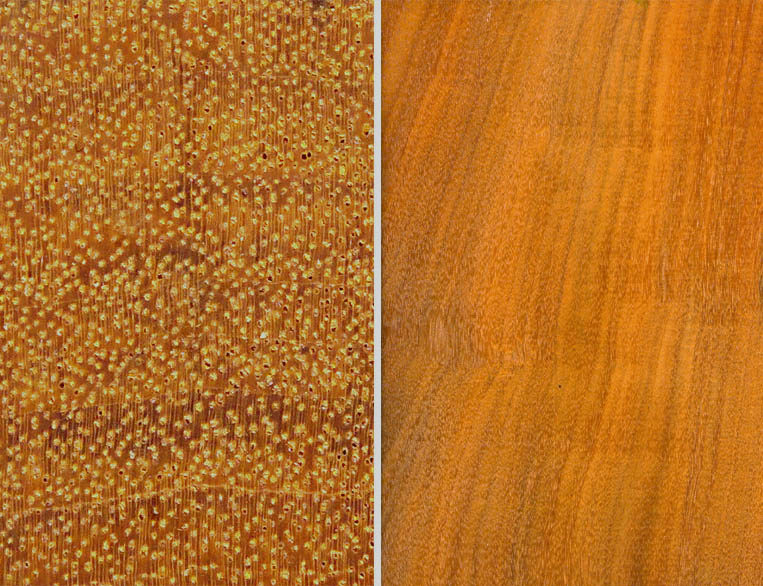
The indeterminacy surrounding the species of Brazilwood is not a retrospective construction on our part: it is explicitly acknowledged by the nineteenth-century commercial sources themselves. Regarding "brésillet" — a commercial category encompassing several red dyewood species — the Dictionnaire universel théorique et pratique du commerce et de la navigation (Guillaumin et Cie, eds., 1859) concedes without equivocation:
« On ignore à quelle espèce du genre cæsalpinia il faut l'attribuer. » ["It is not known to which species of the genus Caesalpinia it should be attributed."] Guillaumin, Dictionnaire universel du commerce, 1859, article "Brésillet"
A century after Linnaeus had fixed binomial nomenclature, and more than half a century after Fourcroy (1800) had attempted to assign each commercial variety of Brazilwood a species of the genus Caesalpinia, the reference work of the French trade concedes that the botanical attribution of the principal competing category to Fernambouc remained unknown. The actors of commerce were therefore not mistaken through negligence: they operated in a framework where taxonomic identification was neither stable nor resolved, even at the highest level of codified commercial knowledge.
Empirical Confirmation: the Sawdust that Turns Violet
A recent observation, published incidentally by an American craftsman on a woodturning forum, provides a remarkable empirical demonstration of the dyeing nature of Caesalpinia platyloba. David Lange Engnald, a turner from Columbus (Nebraska), noticed in August 2020 that after sawing a plank of Chakté Viga, the water in a container left near his bandsaw had spontaneously turned violet through contact with the sawdust. Intrigued, he then documented a comparison experiment: the same sawdust produces, in water, a red-violet hue, and in denatured alcohol, a more saturated red-orange colouration.
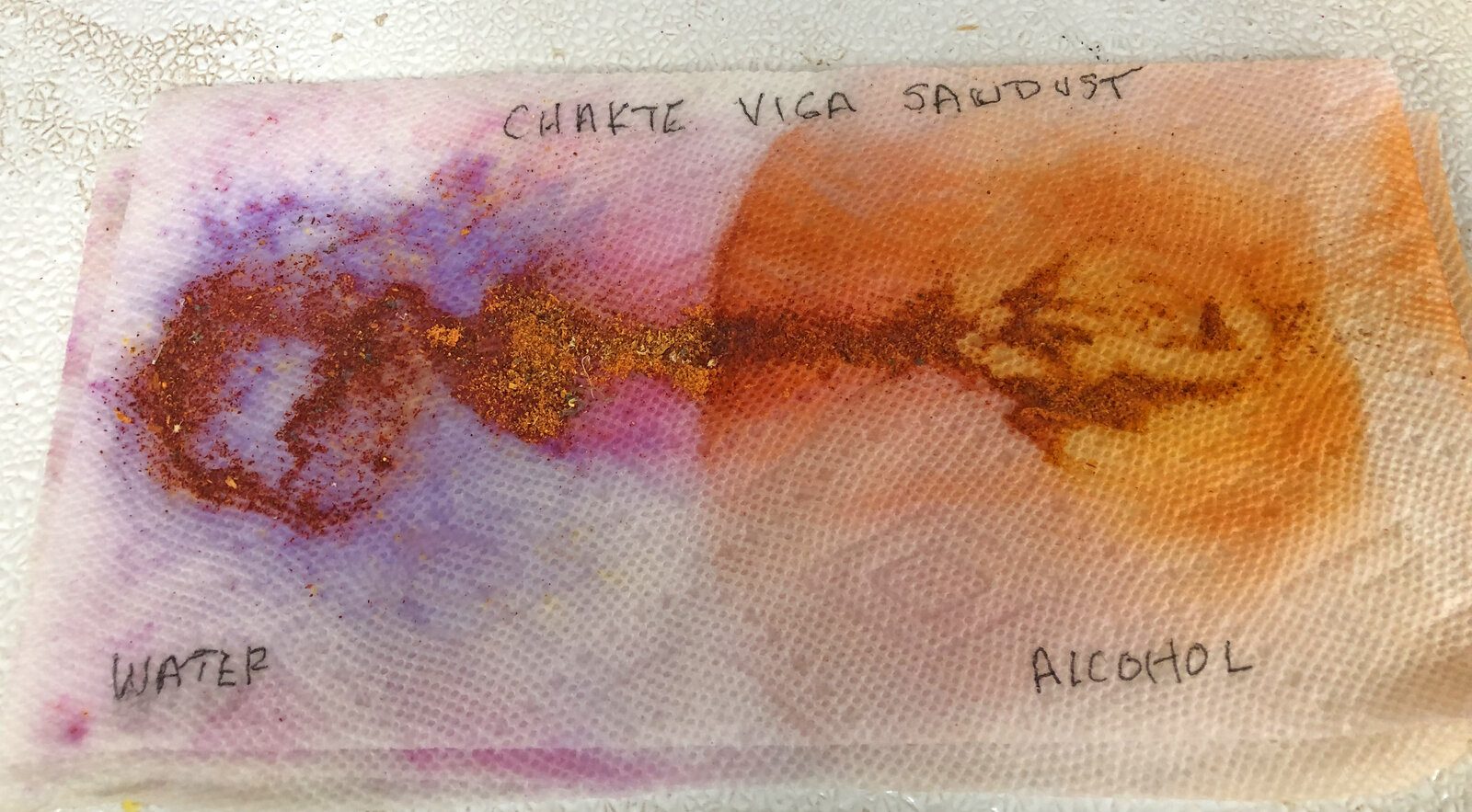
This observation, made without scientific intent and outside any historical context, possesses singular demonstrative value. It establishes that C. platyloba releases, through simple contact with water, soluble phenolic pigments whose exact nature has not been analytically determined, but whose chromatic behaviour — red-violet colouration in water, red-orange in alcohol — is consistent with that of pernambuco's brazilin — and that alcohol extracts these same pigments with superior efficiency, exactly as in nineteenth-century dyeing protocols. A craftsman in Nebraska has, by accident, reproduced the fundamental gesture that motivated the transatlantic trade in red woods. The dyeing performance of C. platyloba, long inferred from its taxonomic position within the brazilin-bearing Caesalpinioideae, is here directly attested by experiment. If this wood released its pigment into the water of a workshop in 2020, it released it just as surely into the dyers' vats of Lyon or Manchester in the nineteenth century — provided it had arrived there, which the argument of this essay supports as structurally probable.
Source: Engnald, David Lange (egnald), "Chakte Viga — a very colorful wood," discussion thread on penturners.org, 28 August 2020, URL: penturners.org/threads/chakte-viga-a-very-colorful-wood.166628/.
The material properties and commercial ambiguities described so far only take on their full meaning within the older history of European bow-makers' supply chains. The plausible integration of Mexican timbers such as C. platyloba presupposes a commercial, technical, and nomenclatural infrastructure already in place, formed as early as the eighteenth century around brazilin-bearing woods.
The Supply Chain before Pernambuco: from Snakewood to Pernambuco
To understand how the export of these woods from Mexico fits into a longer trajectory, we must go back a century. European bow-making workshops did not begin importing tropical wood with Tourte. Well before him, they were already sourcing dense New World timber, in particular snakewood (Brosimum guianense), also known as amourette, letterwood, or leopardwood. This species, native to the Guianas, Suriname, and northern Brazil, extending as far as southern Mexico, was feeding European workshops from the seventeenth century onwards. The commercial supply chain for bow wood thus long predated pernambuco: when the latter established itself at the end of the eighteenth century, it did so within an already well-worn supply network, through the same ports, the same intermediaries, and often the same vessels.
Two primary sources, identified by Dr John Basford, seal this point. The first is the Encyclopédie of Diderot and d'Alembert: at the article "Violon" (1765), published barely a decade before Tourte's first experiments, bow wood is said to be "ordinarily bois de la Chine, although any other that has the necessary strength is equally suited to this use." The formulation is doubly revealing: it establishes that the French standard for pre-Tourte bow-making was indeed snakewood ("bois de la Chine"), and it shows that makers already reasoned in terms of performance — "any other that has the necessary strength" — not species. The taxonomy of performance is here stated word for word, a generation before the modern bow.
The second source is its mirror image. Basford mentions an English viol bow of around 1750, made from pernambuco but painted with black spots to imitate snakewood. This detail is precious: it reveals that in the eighteenth century, snakewood was the cultural and aesthetic standard, while pernambuco was then regarded as an ordinary wood that had to be disguised to pass for something nobler. This is the exact reverse of what would be observed a century and a half later at Mirecourt, where cheap woods would be stained to resemble pernambuco, which had in turn become the reference. The direction of the disguise is inverted — proof that these hierarchies rest on shifting cultural conventions, not on some fixed botanical truth.
The transition from snakewood to pernambuco as the reference wood for modern bow-making is therefore not a rupture in commercial practice: it is a substitution within a pre-existing network. When François Xavier Tourte adopted pernambuco in the 1770s–1800s, he did not build a new supply chain; he redirected an already active one towards a species with mechanical properties better suited to the longer bow. Density alone does not explain this choice: bow pernambuco typically ranges around 0.90 to 1.10 g/cm³, while snakewood is, in that respect, even denser — often between 1.05 and 1.25 g/cm³.
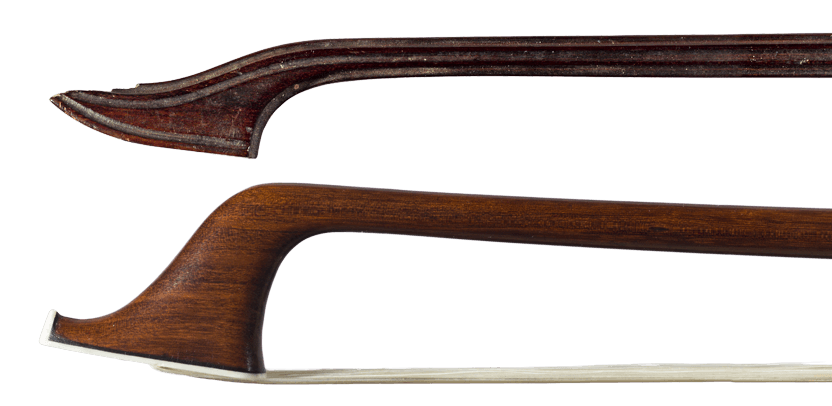
It is precisely this excess of density that posed a problem in Tourte's development of a taller, more verticalised head, allowing the use of a wider ribbon and a longer stick. In such a configuration, carving so voluminous a head in a wood as heavy as amourette tends to shift the centre of gravity excessively towards the tip. The particular combination of density and stiffness of pernambuco appears to have resolved this constraint, making it possible to sculpt the modern head and lengthen the stick while preserving balance in the hand.
Added to this is a better-balanced internal damping producing the singing tone sought rather than an overly dry response — a dimension that contemporary research is beginning to link to the wood's own chemistry: according to Matsunaga et al. (2000), cited by Dapson & Bain (2015), impregnating spruce with pernambuco extracts containing brazilin would produce a significant decrease in the damping coefficient, suggesting that the pigment compounds participate in the acoustic properties. This chemical contribution is consistent with the broader bow-wood literature: Matsunaga et al. (1996) found the loss coefficient (tan δ) of pernambuco to be the lowest among the species they tested and attributed it to the wood's high content of extractives — the very dye compounds prized by the colourist — and a companion study comparing pernambuco with candidate substitutes reached parallel conclusions (Matsunaga and Minato 1998). What made pernambuco an excellent dye — the density and chemistry of its heartwood — would thus also contribute to what makes it an excellent bow wood. One may further add a remarkable stability of camber: pernambuco accepts heat-bending of the modern concave curve and tends to retain this curve durably under the stresses of playing. Snakewood, more brittle and less balanced in its damping, seems by contrast to tolerate this type of work less well over time. It is the combination of these properties — and not density alone — that appears to have favoured Tourte's choice of pernambuco, while the substitute woods of subsequent centuries (massaranduba, "bois de fer," "bois d'abeille") reproduced only imperfectly its mechanical balance.
An archival document nonetheless illuminates the continuation of older species at the very moment of the transition to pernambuco. An autograph receipt by Henry Tourte (Paris, 13 December 1825), signed "for my grandfather Tourte jeune," attests to the delivery to Baron de Tremont of five round-stick bows with plain frogs, divided across three species: three in Bois de Brésil (one bass and two violins), one violin in Bois de Corail, and a last violin in Bois de la Chine (source: Childs, Paul, François Tourte, Bowmaker).
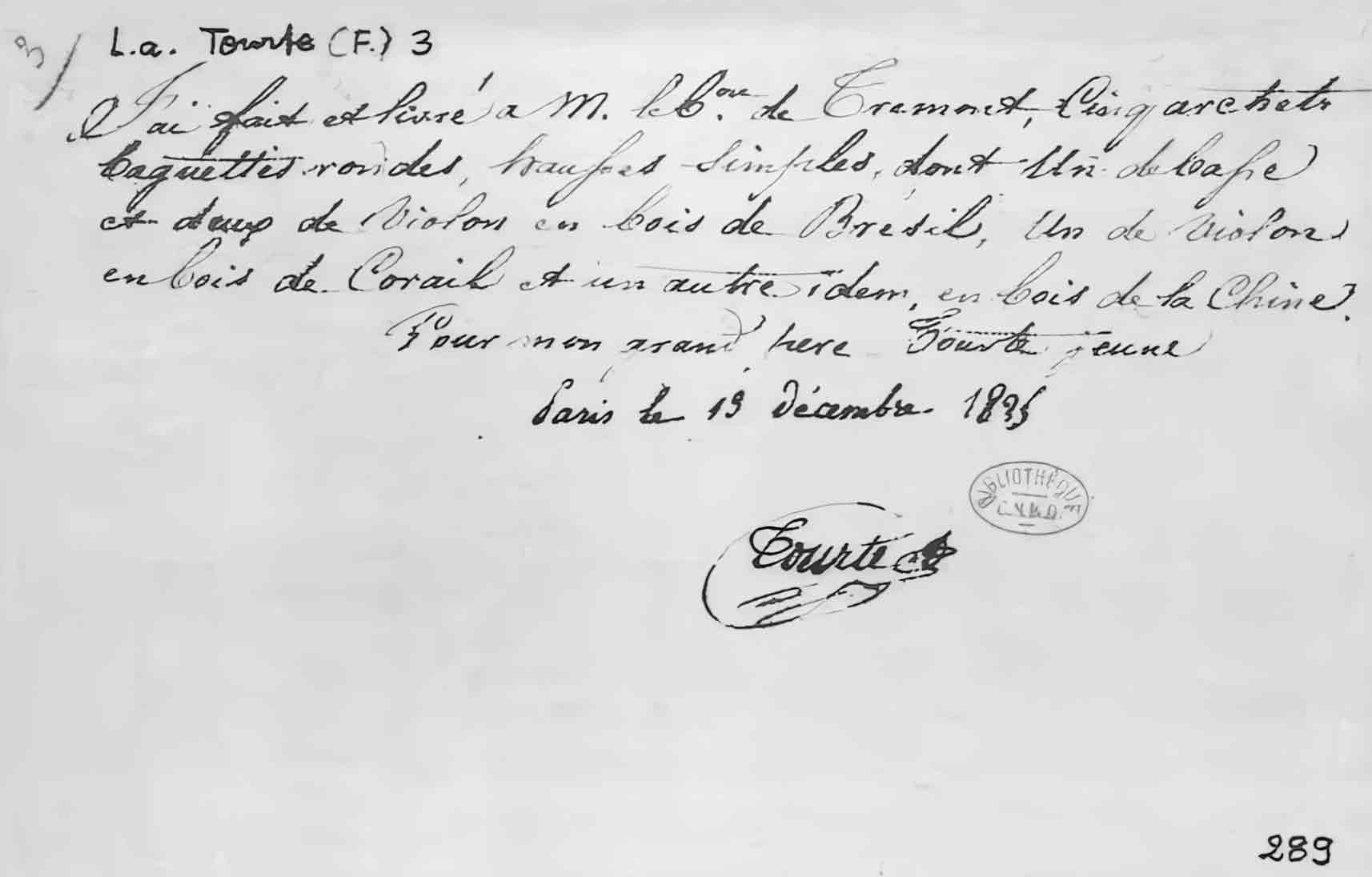
This document is doubly precious. On the one hand, it shows that in 1825 — at the height of pernambuco's consecration — the Tourte workshop was still delivering, on the same order, a bow in the very wood of the pre-Tourte supply chain: for the "bois de la Chine" of the receipt in no way designates a Far Eastern wood. The Dictionnaire de Trévoux (1771) gives the exact definition: "Bois de la Chine... que les Hollandois appellent Letterhout, qui ne croît en aucun autre lieu du monde que dans le continent de Guyane" — that is, letterwood or Brosimum guianense, exactly the snakewood / amourette discussed above. The 1825 receipt thus captures substitution in action: the old species (amourette) and the new (pernambuco) coexist on a single invoice, under commercial names that refer to no taxonomy. (It may be noted that the French edition of Childs preserves the literal term of the receipt, "bois de la Chine," while the English edition substitutes the modern commercial name of the same wood, amourette: both readings are correct, and their divergence is itself a miniature instance of the taxonomy of performance this essay describes.)
It is in this sense that the Parisian workshop of the early nineteenth century functioned as a genuine empirical laboratory: everything that colonial ships unloaded that was heavy, dense, and colourful was put to the test. The "corail" (coral wood), according to the identification proposed by the xylologist Pierre Détienne (CIRAD-Forêt, 2002) on the basis of Roubo's descriptions (1774), would have been provided by large, old trees of Pterocarpus officinalis Jacq. or P. rohrii Vahl (Fabaceae) from the Antilles — with red, sometimes interlocked-grain heartwood — a species subsequently abandoned because of its porosity and difficult behaviour under tools. This identification, made by a contemporary specialist in tropical wood anatomy, illustrates the exercise of historical reconstruction that this article proposes for pernambuco: a commercial name designating in reality several species, fixed after the fact by anatomical examination.
The observation is identical for the other great classic of historical bow-making: "bois de fer" (ironwood). Botanically, ironwood does not exist. This catch-all term covered dozens of South American species with a density greater than water (boco, wamara, pau ferro, etc.). The nomenclature of historical bow-making is thus a nomenclature of use and sense: "bois de fer" named hardness, "bois d'abeille" named an unresolved sensory property — colour, scent, or nectar-bearing flowers — "corail" named the visual appearance, and "bois de brésil" named the chemical yield in the dyers' vat. At no point did this nomenclature concern itself with botanical taxonomy.
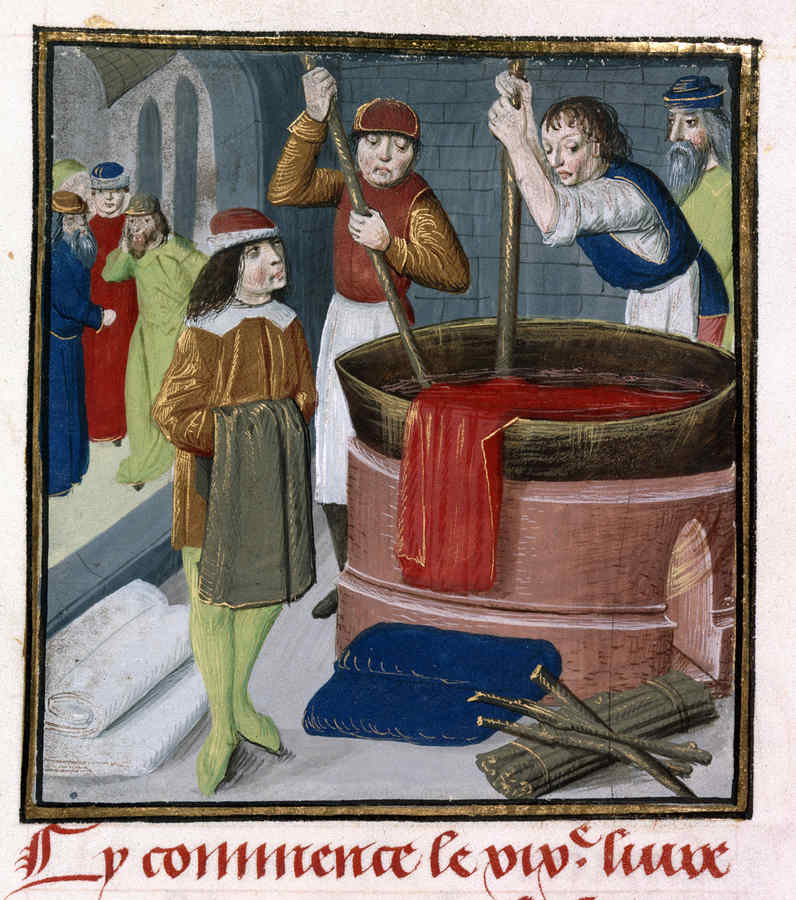
A celebrated anecdote in the bow-making world deserves careful examination, for its partial truth perfectly illustrates the point at hand. According to a well-established oral tradition, Tourte or his father Nicolas Pierre discovered pernambuco not at an exotic timber merchant's, but on the Paris docks, by reclaiming packing crates for sugar, tobacco, or dyestuffs arriving from the Americas. Pernambuco was indeed massively used to make such crates, because of its hardness and antimicrobial properties. This story is dismissed as apocryphal by some luthiers: Dr John Basford — luthier, bow-maker, and restorer since the mid-1980s — notes that the wood actually used for such crates was often Couratari, not pernambuco, chosen for its impermeability; recent studies on colonial packaging (Bernal, Valente and Pissarra) confirm this. But its symbolic truth is entire: pernambuco entered the bow-maker's workshop through the service entrance of the dyeing and colonial supply chain, not through a deliberate process of botanical selection. The modern bow was born of a repurposing: it is fashioned from a raw material whose original vocation was textile dyeing, not instrument-making.
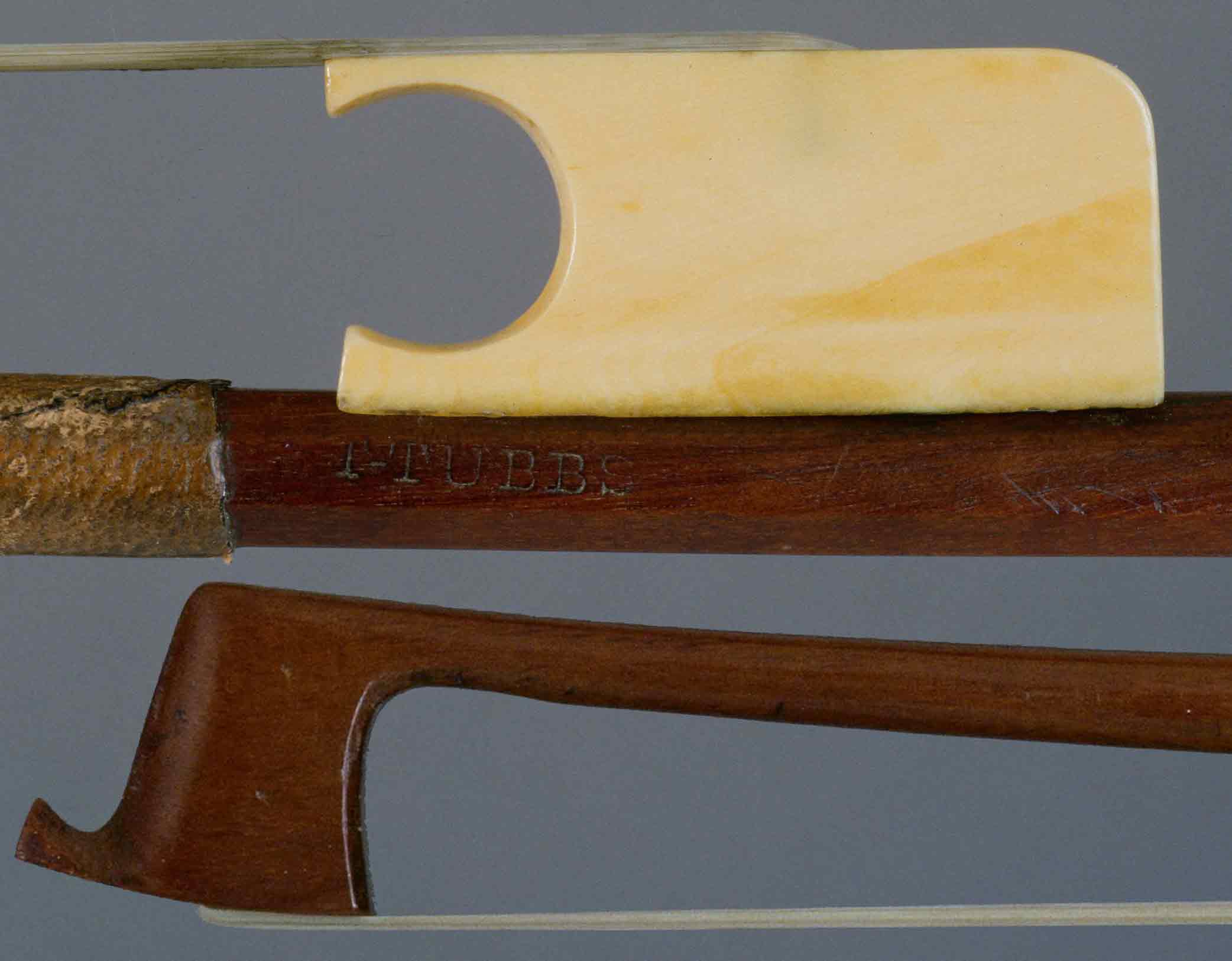
The Tubbs family in England — who were experimenting with pernambuco for bows at the same period as Tourte in France — were previously silk weavers, and therefore knew dyewood not as a luthiery material but as an industrial input. The road from dyewood to the concert bow passes through the same quays, the same warehouses, and the same commercial actors as the road from dyewood to the dyer's vat.
A remarkable continuity emerges: European bow-making workshops sourced dense tropical timbers from Central and South America in a near-unbroken succession from the seventeenth century — first snakewood, then pernambuco recovered from dyeing and colonial supply chains, then massaranduba and other Caesalpinioideae — all under changing commercial appellations and without systematic botanical traceability at any point in this chain. The "bois de brésil" that Tourte ordered, the "palo de brasil" exported from Mazatlán in the nineteenth century, and the "bois d'abeille" of Mirecourt workshops in the twentieth century are not three separate histories. They are three chapters of the same commercial narrative, structured by the same logic: find in the tropical forests of the New World the dense, resilient wood that the European market demands, under the name that market is prepared to buy.
This continuity also corrects a common framing — repeated, for instance, by Aniano (2010) — whereby pernambuco became a bow wood only after the mid-nineteenth century, once it had ceased to serve the dyer. Tourte's adoption of the wood around 1775, in the midst of a still-thriving dye trade (Dapson and Bain 2015), shows that bow-making drew on the same live commercial pool concurrently, not on its exhausted residue.
The Mexican Pacific was not, moreover, the only source of pernambuco substitutes feeding the European trade in the nineteenth century. A second supply chain, geographically distinct but commercially parallel, was structured around the Caribbean — Haiti above all, but also the Bahamas, Cuba, and the Venezuelan coast. French customs statistics for 1834 record a considerable volume of exotic wood from Haiti (approximately 314 tonnes), a significant portion of which belonged to the red dyewood trade. Guillaumin (1859) confirms this explicitly in the article "brésillet": "Le gros brésillet... vient principalement d'Haïti. Ses bûches ont de 1 à 2 mètres de long, sur 5 à 10 décimètres de diamètre, et elles pèsent de 2 à 4 kilog." Détienne (2002), drawing on the descriptions of Roubo (1774), identifies the probable Caribbean species: Caesalpinia brasiliensis L. (which grows in Haiti, not Brazil — the Linnaean binomial is itself geographically erroneous), Caesalpinia bahamensis Lam. (Bahamas and Cuba), and possibly Caesalpinia granadillo Pitt. from the Venezuelan coast. These species, related to the Brazilian Caesalpinia, produced a dense red wood sharing the expected dyeing properties, and thus entered naturally into the commercial category of "bois de Brésil" — literally named brasiliensis, even though they did not come from Brazil.
This chronology makes the place of Caesalpinia platyloba easier to understand. If European bow-making workshops were already sourcing dense tropical wood from the New World as early as the seventeenth century, and if these same networks subsequently channelled Brazilian pernambuco — sometimes recovered from dyeing and colonial chains without precise botanical identification — then the relevant question shifts. C. platyloba grows in the same dry forests of the Mexican Pacific as H. brasiletto, whose export is attested. It produces a dense red-orange wood with comparable mechanical properties. It was available in the same basins. And the intermediaries who loaded these cargoes had neither the tools, the obligation, nor the economic incentive to distinguish two dense red woods at the cut. The Mexican supply chain to European bow-making does not begin with pernambuco: it predates it, with snakewood, and survives it, with massaranduba. C. platyloba had only to be in the right place at the right time — which, geographically and ecologically, was precisely the case. Under these conditions, its inclusion in these flows is at least as plausible as its exclusion. No archival evidence settles the question in either direction; what the commercial structure establishes is the plausibility of inclusion, not its occurrence.
The Anatomy of a Commercial Name: the Documented Case of "Bois d'Abeille"
Let us now turn to a substitution that is not inferred but attested by the archives. "Bois d'abeille" is not a botanical species; it is a commercial and vernacular name used in European bow-making, and especially at Mirecourt, to designate a group of ultra-dense tropical South American species employed as substitutes for student bows.
The principal species concealed behind this label is massaranduba (Manilkara bidentata, family Sapotaceae), as well as other species of the genus Manilkara. The etymology of the name remains to this day unresolved. The only direct source available in the forestry literature is Bruleaux (1989), who reports that Guianese cabinetmakers "called [balata/massaranduba] bois abeille because of its beautiful red colour" — an explanation linking the name to visual appearance rather than to any olfactory or gustatory characteristic. Several complementary hypotheses deserve mention without any of them being resolvable on the basis of known sources: the tree's white, sweet sap, documented as early as 1867 by Soubeiran and Delondre who note that massaranduba produces "a sap of a very white and very savoury colour"; the highly nectariferous flowers of certain Sapotaceae, capable of attracting bees; or an origin in an Amerindian vernacular term whose exact meaning was approximated. The parallel with the English name for the same wood, bulletwood — given, according to sources, either because the wood is "hard as a bullet" or because such was the local populations' term — illustrates how these folk etymologies stratify several competing logics without any one prevailing. It suffices to note that the name is sensory or poetic, purged of all taxonomic information.[5]
The existence and durability of this category are solidly attested by French auction records, which explicitly document pieces such as "baguette en bois d'abeille verni teinté, travail ordinaire de Mirecourt vers 1920" or "archets de violon en bois d'abeille de l'école de Mirecourt." These recurring mentions in antique instrument sale catalogues prove that the term is an established historical commercial marker, not an isolated case; the manufacture of Mirecourt bows in massaranduba is moreover documented through to the 1980s, proof that this nomenclatural practice was maintained well beyond the industrial era of the nineteenth century. Rather than honestly labelling the material "massaranduba," the trade settled on a poetic appellation that dilutes the information all the way to the final buyer: the traceability break is consummated at the moment the material enters the chain. This is the substitution mechanism described in this essay — in action, no longer in hypothesis.
This category was not confined to anonymous student production. Aniano (2010) reports anecdotal evidence that two leading bow-makers of the late nineteenth and early twentieth centuries — Charles Peccatte and Émile-François Ouchard — each appear to have kept a quantity of massaranduba (Manilkara bidentata) in their workshop stock. The testimony is anecdotal and should be treated as such, but it is a telling indication that the material reached the bench of named masters, and not only the production lines of Mirecourt.
The Alcohol-Cotton Test: an Index of Chromatic Malleability
Every restorer who has cleaned a Mirecourt bow (1900–1950) has made this observation at least once: at the touch of an alcohol-dampened swab, the stick "bleeds." What is revealed most often is a cosmetic dye applied to mask too pale a wood or wood defects.
The simple recourse to this dyeing proves a decisive point: had the wood natively possessed the dark red-brown colour of canonical pernambuco, it would not have needed to be stained. Chromatic disguise presupposes an underlying wood that does not spontaneously possess the expected appearance. This observation is compatible with two hypotheses, and only two: either it is a pale-morphotype Paubrasilia echinata (the laranja morphotype is attested), or it is another Caesalpinioideae with paler wood integrated into the supply chain. In both cases the conclusion is the same: what the bow-maker and the final buyer validated under the name "pernambuco" was not a biological identity, but a set of visual and mechanical properties that was constructed — including, on occasion, through chemical intervention. The colour of pernambuco in the industrial bow-making of the early twentieth century had become a cultural code applied to a material reality more diverse than the naked eye alone can detect.
Engnald's experiment described above further confirms that alcohol is a particularly effective extractor of Caesalpinioideae pigments.
Selection by Density
The myth of the craftsman sovereignly selecting his wood at source deserves to be dismantled. Parisian "haute archèterie" of the nineteenth century was entirely dependent on the catalogues of exotic timber and dyestuff commission merchants. On the docks, wood was not evaluated by a botanical manual but by empirical performance criteria: intensity of red at the cut, density (logs saturated with pigments and resins that sank immediately), presumed brazilin yield. These criteria, replicated identically by the industrial chemists of the time, underpinned a rigorous but taxonomically blind price hierarchy. As Jean-Pierre Girardin explains in the fourth edition of his Leçons de chimie élémentaire appliquée aux arts industriels (1860), the commercial red woods are classified by their brazilin content, itself correlated with the density of the heartwood; pernambuco, the hardest and densest, is the benchmark, while the woods of Sainte-Marthe and Mexico are described as poorer in colouring agents, paler and less dense.
The Dictionnaire universel théorique et pratique du commerce et de la navigation (Guillaumin et Cie, eds., 1859) gives the explicit price scale for the 1850s, under the entry "Brésil (Bois de)":
« Le prix du bois de Pernambouc varie de 120 à 150 fr. les 100 kilogr. ; celui de Sainte-Marthe de 50 à 70 fr. ; le Sappan de 30 à 45 fr. ; les bois des Antilles et du Mexique de 15 à 25 fr. » ["The price of Pernambuco wood varies from 120 to 150 fr. per 100 kg; that of Sainte-Marthe from 50 to 70 fr.; Sappan from 30 to 45 fr.; the woods of the Antilles and Mexico from 15 to 25 fr."] Guillaumin, Dictionnaire universel théorique et pratique du commerce et de la navigation, 1859, article "Brésil (Bois de)"
The ten-to-one spread between Brazilian "Premier Choix" and Mexican Pacific woods does not reflect a botanical judgement, but merchants' assessment of pigment concentration. And above all, the fact that these four categories are quoted within the same entry of the commercial dictionary — Pernambuco, Sainte-Marthe, Asian Sappan, woods of the Antilles and Mexico — directly confirms the thesis advanced here: the market of 1859 did not distinguish four separate trades, but four grades of a single commercial category of "red dyewood." Sappan (Caesalpinia sappan), an Asian wood with no botanical connection to Brazilian pernambuco, is treated by merchants as a simple lower-quality substitute, exactly like the Mexican woods (Haematoxylum brasiletto and, in all likelihood, Caesalpinia platyloba). This same price hierarchy appears, with local variations, in the contemporary commercial quotations of London and New York, confirming that this is not a French customs peculiarity but a global market structure.
| Commercial grade | Probable species | Origin | Price / 100 kg (fr.) |
|---|---|---|---|
| Pernambuco (1st choice) | Paubrasilia echinata | NE Brazilian coast | 120–150 |
| Bois de Sainte-Marthe | Caesalpinia spp. | Caribbean, Colombia | 50–70 |
| Sapan / Sappan | Biancaea sappan | India, South-East Asia | 30–45 |
| Woods of the Antilles and Mexico | H. brasiletto; C. platyloba (probable) | Mexican Pacific, Caribbean | 15–25 |
French customs statistics confirm this substitution mechanism on a large scale. According to Guillaumin, in 1839 France imported approximately 875,000 kg of Fernambouc wood, valued at 1.80 fr. per kilogram, originating chiefly from Brazil, the Netherlands, and the Sardinian states. Five years later, in 1845, this figure had collapsed to 101,000 kg — a fall of roughly eight to one, reflecting the exhaustion of Brazil's coastal forests. Yet in the same interval, imports of sappan and Nicaragua wood, presented by Guillaumin as direct substitutes, rose from 496,000 kg to 740,000 kg. The market for "red dyewood" did not retreat: it recomposed its supply by replacing the failing Fernambouc with other brazilin-bearing species. Substitution is therefore not merely a theoretical commercial logic; it is measurable in the customs data.
In the same volume, Guillaumin explicitly documents the physical mechanism of this substitution. Regarding sappan, the author notes:
« On les substitue ou on les mêle souvent aux bûches de Fernambouc, qui sont d'un prix élevé. Cette fraude est facile à reconnaître par l'inspection des tranches : celles du sapan offrent au centre l'orifice d'un canal médullaire qui est très-apparent ; les bûches de Fernambouc, au contraire, sont dépourvues de moelle ou n'en ont qu'un filet presque capillaire. » ["They are often substituted for or mixed with Fernambouc logs, which command a high price. This fraud is easily recognised by inspection of the cross-sections: those of sappan show at the centre the opening of a pith canal that is very apparent; the logs of Fernambouc, on the contrary, are devoid of pith or have only an almost capillary thread."] Guillaumin, 1859
This precision has two consequences. On the one hand, the nineteenth-century trade did indeed possess an anatomical test capable of discriminating between sappan and Fernambouc on raw logs. On the other hand, the very existence of this test — and the fact that Guillaumin judges it useful to publish — attests that substitution was common, sometimes contested, and that at a high grade purchased at great cost, the confusion could be designated by contemporaries themselves as "fraud." The taxonomy of performance dominated ordinary commerce; fraud appears, in the sense contemporaries understood it, only at the transaction interfaces where a premium grade had been contracted for payment and was delivered in another species. This point does not contradict the general thesis: it defines its perimeter.
This legal limit of the notion of fraud finds a striking judicial illustration on the other side of the Atlantic. In 1804, a New York State court ruled in the case of Seixas and Seixas vs. Woods on a substitution of brazilleto (Brazilwood) by peachwood (Haematoxylum brasiletto) — two woods that the trade sometimes designated under neighbouring appellations. The court ruled that the seller, ignorant of the wood's true nature, had not knowingly deceived the buyer and was not held liable (as reported by Dapson & Bain, 2015). The case became a precedent for the caveat emptor rule — "let the buyer beware." This judgement is itself a confirmation of the thesis: confusion between related brazilin-bearing species was so deeply embedded in commercial practice that a 1804 court regarded it as a good-faith error, not a fraud.
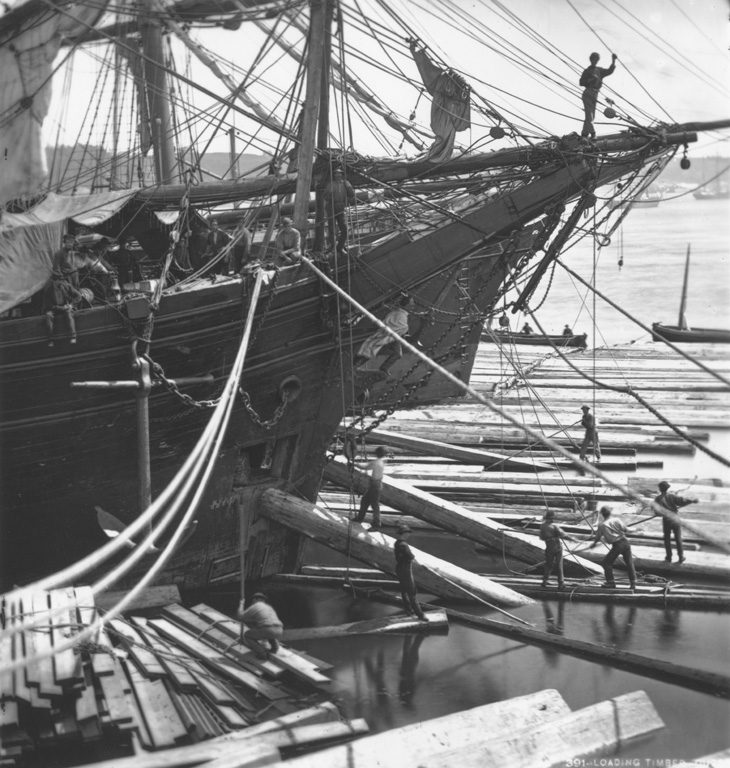
The dockside timber pricing policy does not translate mechanically into the economics of bow-making. The prices of bows themselves, as documented by Paul Childs in his work on Tourte, paint a more complex picture than one might expect. The two surviving receipts from the Tourte–Tremont correspondence of December 1825 give the tariffs explicitly in francs: the receipt of 31 December 1825 records three plain violin bows at 24 francs each, a fourth plain violin bow at 36 francs, and a plain cello bow at 42 francs. Silver-mounted bows reached higher prices, and the most prestigious pieces — gold and tortoiseshell mounted — could reach 72 to 120 francs. These levels were themselves exceptional for the period: Tourte was one of the first bow-makers to succeed in selling bows at substantial prices, where most of his contemporaries and predecessors struggled to exceed a few francs per piece. It was in part Tourte himself who established the commercial possibility of a "haute archèterie."
The Mirecourt workshops, discussed above, did not truly consolidate until after Tourte — first in waves from the 1830s–1850s, then massively in the late nineteenth and early twentieth centuries. When this supply chain reached full scale, it produced bows in a range running from approximately 1.50 to 40 francs, below Tourte's tariff. But this is not, strictly speaking, a synchronic competition: Mirecourt occupies and organises a market segment that, at Tourte's time, did not yet exist as such — a segment characterised by relative standardisation, yield pressure, and a range segmentation running from top to bottom. Tourte established the summit; Mirecourt workshops, two or three generations later, deployed the volume beneath.
The second element to consider is the share of raw material in a bow's price. A bow stick consumed approximately one kilogram of raw wood once cutting waste was accounted for. At the 1859 "Premier Choix" Pernambuco price (1.50 francs per kilogram according to Guillaumin), this represented barely one and a half francs of wood per bow. It should be noted that these are wholesale dockside prices — primarily Bordeaux and Nantes for the French Atlantic coast, Amsterdam and Hamburg for the northern markets. Paris being no maritime port, the wood acquired by Tourte involved a second logistical segment, either by coastal cabotage then river haulage up the Seine, or by road via the Loire and the canal network. This additional journey was itself burdened, over the period 1793–1815, by the maritime wars with England, the Continental blockade, and the fragility of coastal links. The Parisian workshop price was therefore significantly higher than the wholesale port price. But even doubling or tripling the material cost per bow to account for this logistics, one still obtains a wood value of less than five francs per stick — meaning that for a plain violin bow sold at 24 francs, the material fraction was between one fifth and one quarter; for a 36-franc violin bow, approximately one eighth; and for the most prestigious gold-and-tortoiseshell pieces, barely a few per cent of the selling price. As in all luxury craftsmanship, the raw material occupied, in value, a marginal share as one moved up the range: what Tourte was selling was not pernambuco — it was labour, finish, and, as his reputation established itself, a name.
The economic conclusion is clear: neither Tourte in his lifetime, nor the regional workshops that succeeded him, had any need to purchase a wood fundamentally different from what circulated throughout the supply chain. They could perfectly well source from the same commercial pool — brazilin-bearing woods indiscriminately labelled "bois de Brésil," "sappan," "peach wood," or "palo de brasil" on the docks. What distinguishes a Tourte from an ordinary regional bow is not decided at the moment of raw-material purchase, but at the workbench.
It is there, at the workbench, that the central mechanism of this history plays out — the very one that allows an apparent paradox to be resolved. If substitution was structurally possible, how does one explain that the sticks of the great nineteenth-century bow-makers anatomically examined to date — Lupot, Grand Adam, Vuillaume, Sartory, and a Mirecourt bow of 1920 in Macedo et al. (2020) — are all identified as genuine Paubrasilia echinata? The Mexican case, where related species such as Caesalpinia platyloba could pass the workbench test without ever being named, already gives an intuition of the answer: it does not rest on any upstream commercial privilege, but on a sorting mechanism whose general formulation is developed below.
Notes
Sources — Part II
Primary Sources
Guillaumin, G.-U., Dictionnaire universel théorique et pratique du commerce et de la navigation (Paris, 1859). — Bruleaux, A.-M., "Deux productions passées de la forêt guayanaise" (1989). — Soubeiran, J.-L. and Delondre, A., Les produits végétaux du Brésil (1867).
Secondary Sources
Macedo, T. et al., "Wood anatomy of historical French bows," IAWA Journal 41/2 (2020). — Pradeep, A.K. and Vrinda, K.B., "Caesalpinia sappan: an economic medicinal tree" (2007). — Dapson, R.W. and Bain, C.L. (2015). — Marichal, C. and Pretel, D. (eds.) (2024). — Détienne, P., CIRAD/BFT (2002). — Hadfield, W., Brazil, the River Plate, and the Falkland Islands (1854).
Part III
The Workbench as Judge, and Modern Traceability
Craft selection as an epistemic filter — Fétique, Ouchard, Sartory — and the limits of the contemporary regulatory framework, from CITES to CoP20 in Samarkand (December 2025).
Two Sorting Mechanisms, One Pool of Wood
The apparent botanical homogeneity of elite Parisian production is not evidence against the substitution thesis — it is the product of severe filtering applied to a heterogeneous supply. The market for dense red wood in the nineteenth century operated through two distinct sorting mechanisms, both drawing on the same commercial pool of brazilin-bearing woods:
Upstream sorting is the kind Guillaumin documents: a price hierarchy constructed by commission merchants on the basis of observed density and intensity of red at the cut. This sorting never names species. The "Premier Choix" at 150 francs per 100 kg selected logs that statistically were more likely to be P. echinata, but could also be particularly dense sappan, or a superior-quality C. platyloba that had made it to the dockside.
Downstream sorting operates at the workbench, over weeks or months of work. Its severity varied from workshop to workshop: extreme at Tourte's, where it devoured the margin but produced pieces converging towards remarkable anatomical homogeneity; moderate in regional workshops concerned with moving their stock; minimal, finally, in certain Mirecourt production-line workshops after 1880, where yield took precedence over selection. The same log could be purchased by three different workshops and yield three bows of radically different quality, simply because the craft filter was applied with three different levels of rigour.
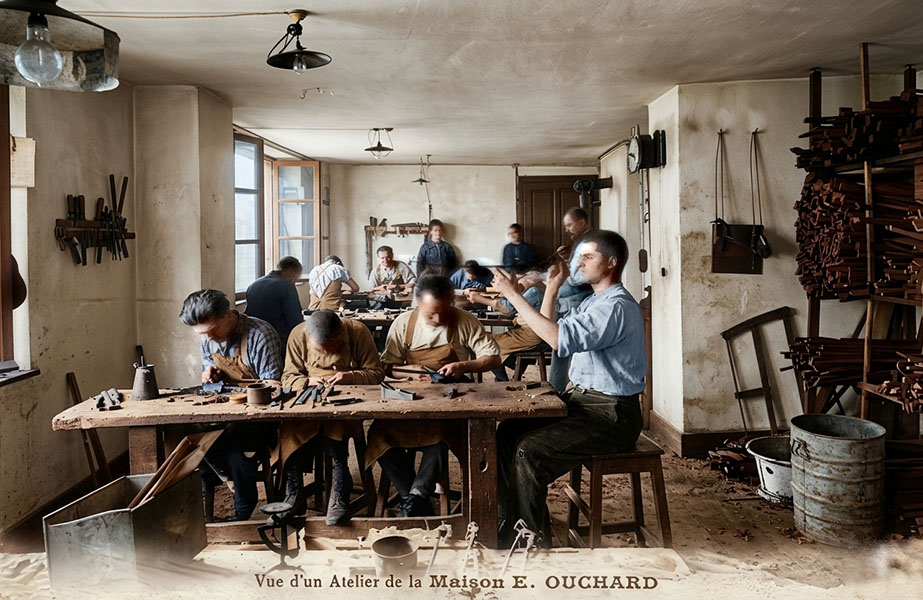
These two mechanisms are not in opposition: they are cumulative. But their relative importance is inverted as one moves up the quality hierarchy. At the bottom of the market, upstream sorting dominated (you got what you paid for); at the top, downstream sorting dominated (you rejected until only the excellent remained). One must be careful about what the anatomical literature allows us to assert today. The principal study available (Macedo et al., 2020) covers a sample of five historical French bows — a Lupot (1810), a Grand Adam (1840), a Vuillaume (1850), a Sartory (1890), and a Mirecourt bow of 1920 — all identified as genuine Paubrasilia echinata, anatomically assigned to the "arruda" morphotype from north-eastern Brazil (Rio Grande do Norte and Paraíba). The presence in this corpus of a Mirecourt bow of 1920 deserves emphasis: it indicates that at least part of Mirecourt production, even at a late date, was genuinely made in canonical pernambuco. It must be borne in mind, however, that a sample of five sticks cannot be representative of a production of several hundred thousand bows over a century and a half. To our knowledge, no systematic anatomical study has been conducted on a large sample of the lower segments of Mirecourt production — the production-line bows in the 1.50-to-10-franc range where yield pressure was greatest. If bows in bois d'abeille, amourette, or visually identifiable exotic woods are set aside, a portion of this production presents woods visually classed as "pernambuco" but of mediocre quality, often more porous. Are these geographical variants of P. echinata, or related species accepted into the supply chain? The question remains open. The framework proposed here predicts that greater botanical heterogeneity would be found there than at the top: this is an inference from the two-mechanism sorting model, which is to date neither refuted nor empirically confirmed at large scale. For the bow-maker in practice, this presumed asymmetry has a concrete translation: as one moves up the range, it is not the supplier who becomes more rigorous — it is the workshop that becomes more demanding about what it will accept to transform into a bow sold under its name.
The AOC: the Modern Answer that Reveals, a contrario, a Historically Insoluble Problem
The best analytical tool for measuring the scale of this historical indifference to taxonomic precision is perhaps, paradoxically, a tool of the present: Appellation d'Origine Contrôlée (AOC) systems and, more broadly, modern raw-material traceability mechanisms.
AOC systems for olive oil, cheeses, wines, and honeys were built precisely in the twentieth century because the market's spontaneous traceability was insufficient. These systems, today solidly institutionalised, are regulatory responses to a structural market failure: the inability of economic actors to guarantee, without a binding mechanism, the authenticity of a product's origin.
Yet even with these systems in place, AOC fraud remains massive and regular. Extra-virgin olive oil is one of the most adulterated food products in the world: oils of lesser quality or undisclosed origin are routinely blended and marketed under protected labels. Honeys, PDO cheeses, and even some wines are subject to documented large-scale adulteration, despite institutional controls, chemical analyses, and criminal sanctions.
The historiographical lesson is clear: if fraud is endemic despite traceability, what must we conclude about the state of commercial exchange in an era when traceability simply did not exist?
For tropical timbers, certification systems (FSC, CITES, etc.) were only introduced in the second half of the twentieth century, and their real-world effectiveness remains deeply debated. There exists, to this day, no true equivalent of the AOC for forest species.
In this context, claiming that in the nineteenth century the cargoes of "palo de brasil" exported from Mexican Pacific ports contained botanically verified and homogeneous species is not a cautious hypothesis — it is a methodological anachronism.
The Twentieth Century: from the Dye Vat to the Instrument-maker's Workshop
The advent of aniline-based synthetic dyes at the end of the nineteenth century swept away the international dyewood trade. In the twentieth century, the trajectory of Caesalpinia platyloba repositioned itself towards the exploitation of its remarkable mechanical properties and acoustic qualities appreciated by some luthiers.
Structural Resistance and Local Uses
Endowed with high density and exceptional resistance to decomposition and wood-boring insects, the wood became a material of choice at regional scale for durable fence posts and agricultural infrastructure in Mexico, with posts reported to remain serviceable in the ground for more than a century. The mechanical properties of Chakté-viga, characterised by ITTO project PD 385/05 Rev. 4 (Silva Guzmán et al., 2012; density 0.891–0.958–1.014 g/cm³), place it well within the density range documented for bow-making pernambuco (0.9–1.2 g/cm³; Brémaud, 2010), although somewhat below the densities generally associated with the most highly prized modern bow wood.
Beyond its mechanical characteristics, the ITTO programme produced another observation of direct relevance to the present argument. Two logs supplied by local ejidos under the single vernacular name Chakté-viga proved, upon anatomical examination, to belong to two distinct Caesalpinia species (C. cf. platyloba and an undetermined Caesalpinia sp.). The two woods were macroscopically almost indistinguishable yet differed markedly in the ultraviolet fluorescence of their aqueous extracts. The pattern traced throughout this essay—a single commercial or vernacular designation encompassing more than one taxon—is therefore not merely a historical reconstruction. It can be observed directly under conditions of modern, state-supervised sourcing.
The same research programme also encountered a dynamic strikingly reminiscent of earlier brazilwood booms. According to H.-G. Richter (personal communication, May 2026), researchers returning to the Yucatán around 2010 to obtain additional material were unable to secure further specimens from local ejidos, whose members preferred more lucrative export sales to Chinese buyers. The underlying economic logic of the historical palo de brasil trade thus remains recognisable; only the destination markets have changed.
The Luthiery Niche: an Ambiguity that Regulation Seeks to Resolve
In the second half of the twentieth century, faced with the scarcity of traditional precious woods, C. platyloba gradually found a place on the international speciality timber market under the commercial names Chakté Viga or Paela. Its integration into the world of instrument-making reveals several market dynamics, noticeably different depending on the craft community targeted.
On one side, guitar-makers integrated this species in a relatively open and documented manner. Appreciated by some luthiers for its stability, acoustic properties, and shimmering colour, Chakté Viga is explicitly named in lutherie timber supplier catalogues and used notably for fingerboards and, more recently, for certain guitar backs and sides. Here, commercial traceability, however modest, assumes the species' identity.
A second segment, equally important to recognise, concerns artisanal bow-making workshops — today mostly independent or organised in small structures — that strive to source pernambuco through documented channels. The principal legally available resource remains pre-CITES stock, that is, wood acquired before the listing of Paubrasilia echinata in Appendix II on 13 September 2007. The authentication of these stocks rests, to date, on chains that are essentially declaratory and documentary rather than on systematic analytical verification — as the CITES Secretariat explicitly acknowledged in its preparatory report to CoP20 (Fine tuning traceability solutions, 2025).
This structural fragility reached a peak at CoP20 in Samarkand (24 November – 5 December 2025), where Brazil, through Proposal 46, requested the uplisting of pernambuco to Appendix I of the Convention — which would have prohibited all international commerce, including finished bows. This proposal was withdrawn at the very last moment thanks to the coordinated intervention of a delegation of bow-makers (IPCI France-Europe, EILA, CSFI), in favour of a compromise adopted by consensus on 5 December 2025. Annotation #10 was substantially amended and entered into force on 5 March 2026: the general exemption that finished bows had enjoyed in international commerce is removed, and only non-commercial movements (concerts, loans, teaching, expertise, repair, without transfer of ownership) remain exempt. Any cross-border change of ownership (sale, succession, inheritance outside the state of residence) will henceforth be subject to a CITES permit — except between European Union member states, which constitute a single Party.
This episode is significant for the thesis advanced here. The Parties to CoP20 have, through Decisions 20.239–20.243, tasked the CITES Secretariat with analysing, comparing, and developing — over three years, with a view to CoP21 planned for Panama in 2028 — the traceability mechanisms applicable to pernambuco. In other words, in December 2025, 185 sovereign states officially recognised that no robust traceability system yet existed for a species that had been listed under CITES for 18 years. The central argument of this essay — namely that botanical traceability is not a spontaneous property of the market and must be deliberately constructed — is thus supported not by historical deduction alone, but by a contemporary diplomatic decision. The artisanal bow-makers who already operate today within a scrupulous documentary framework do not contradict this thesis: they are, on the contrary, the minority actors who are anticipating the system that the international community is attempting to build.
The picture changes completely in industrial bow-making — understood here as the flows of mass production and low-cost importation, distinct from contemporary French artisanal workshops — where the commercial power and historical prestige of the word "pernambuco" have eclipsed the botanical reality. On this market, introducing a name like Coulteria platyloba would be a commercial disadvantage; so ambiguity settles in through attrition along the chain. A wholesaler may market student bows with a cautious phrase — "wood close to pernambuco" — but this semantic precaution fades in the transition from wholesale to retail: the final reseller, facing a clientele that demands "pernambuco" for reasons of prestige, rarely passes on the nuance, and the "close to" becomes "genuine" in the buyer's mind. At both ends of this market — from bulk import to direct e-commerce — botanical traceability between the forest and the bow remains structurally deficient, with visual performance and the commercial label taking precedence over species identity. Two well-documented contemporary cases suffice to demonstrate this.
The Contemporary Market: the Emergence of "Caribbean Pernambuco"
A particularly clear example of this persistent taxonomic malleability appears today in the catalogues of the main European suppliers of exotic woods for lutherie. In 2026, the German wholesaler Espen markets prominently bow blanks sold under the appellation "Caribbean Pernambuco." Botanically, this appellation is a commercial fiction: these are in all likelihood related Central American species (probably Caesalpinia violacea or C. velutina), without the supplier specifying the exact taxonomy.
Yet modern acoustic tests are unambiguous — up to a point. These blanks commonly display Lucchi stiffness-tester scores above 5000, even 5500 m/s, placing them at the very top of professional bow-making requirements. But Lucchi velocity must not be confused with acoustic equivalence. The stiffness tester measures the velocity of sound propagation in the wood, from which the stiffness-to-mass ratio (specific modulus) is derived: a necessary property, but not a sufficient one. True Paubrasilia echinata also possesses a very particular viscoelastic damping profile, which master bow-makers prize above all other characteristics — a property quantified by Matsunaga et al. (1996), whose measurements place pernambuco's damping coefficient below that of every alternative tested (see also Brémaud 2010). Woods such as Chakté Viga, massaranduba, or certain Caribbean Caesalpinioideae can equal or surpass pernambuco in Lucchi velocity while feeling subtly "dead," "brittle," or too rigid in the hand — precisely because their internal damping differs. They share its density and modulus of elasticity without reproducing its full mechanical signature. This is what makes the following figure eloquent: at a rigorously equal Lucchi score, a "Caribbean Pernambuco" blank (Lucchi 5100–5199) sells for €39 at Espen, against €135 for a "PRE-CITES Brazilian Pernambuco" blank of the same score — a ratio of 1 to 3.5. The comparison is probative here, where a simple catalogue price gap would not be, because the measured performance is held constant: what the market pays extra is not the score, but the residual uncertainty about viscoelastic behaviour that the score cannot capture — and the name that guarantees it.
The configuration here is close to that of the nineteenth century, with one important difference. In 1859, merchants confused taxa under a single name ("bois de Brésil") without geographical qualification, and substitution operated invisibly. Today, the label "Caribbean Pernambuco" is geographically transparent (it explicitly names a non-Brazilian origin) while remaining botanically opaque (it specifies no species). This shift is not accidental: by adding a geographical modifier, the supplier legally circumvents the CITES restrictions targeting Paubrasilia echinata endemic to Brazil, while exploiting the same mechanism of psychological and acoustic substitution that has structured the dyewood and bow-wood market for centuries. Yesterday, semantic ambiguity served to palliate supply disruptions while satisfying technical demand; today it fulfils the same technical function while exploiting a regulatory exemption. The form changes with the centuries; the structure does not.
Source: Espen Tonholz/Tonewood (shop.espen.de), product listing "Bow Blank Violin Caribbean Pernambuco Lucchi 5100–5199" (ref. KPN30304), consulted May 2026.
"Mexican Pernambuco": Substitution on the Finished Bow
The same nomenclatural slippage is observed with even greater acuity, and direct economic consequences, on the market for finished bows — no longer the raw blank, but the finished object sold to the musician. Where the guitar-maker frankly names Chakté Viga, commercial bow-making, as we have seen, tends instead to make it disappear under a nobler appellation; the case below presents this in its most developed form. It reveals a double labelling that exposes the Mexican supply chain, and a divergence of commercial strategy that constitutes, in real time, a case study of the thesis advanced here.
On one side, student bows are marketed by the French importer Sebim — a house whose sourcing is substantially Asian, the blanks being shaped in China from wood acquired in Germany and the Netherlands (information communicated by Sebim to the author, May 2026) — under frank botanical appellations: a bow in Chakte Viga (Caesalpinia platyloba, now Coulteria platyloba) at around 250 euros, and a bow in Coulteria sp. at around 300 euros.[7] This last appellation, which names the genus without specifying the species, is the one the Chinese manufacturer itself uses on its invoices and customs declarations — and which Sebim has preserved rather than translating it into a more flattering commercial label. On the other side, higher-range bows, also cut from a Mexican wood and signed "M. Pereira" (made in Portugal), are offered under the appellation "Mexican pernambuco" at prices ranging from 1,400 to 3,200 dollars — sold, moreover, as "CITES approved."
What gives this juxtaposition particular acuity is the recent evolution of Sebim's commercial policy. Since March 2026, the importer has made the explicit decision to name the species of its student bows without resorting to appellations of the type "pseudo-pernambuco," "close to pernambuco," or "Mexican pernambuco" — precisely in order to avoid customs difficulties that these ambiguous formulations could provoke (information communicated by Sebim to the author, May 2026). The choice is therefore both ethical and pragmatic: botanical transparency combined with anticipation of the regulatory risks linked to CITES.
We thus find ourselves before a remarkable case: two retailers facing the same material — a dense Mexican wood with acoustic properties comparable to pernambuco —, two different target markets, and two strictly opposed nomenclatural strategies. On Sebim's side, botanical transparency was introduced upstream, at the Chinese manufacturer itself, whose customs documents carry the botanical appellation without embellishment; Sebim maintained it rather than replacing it with a more commercial denomination. On the distributors of M. Pereira bows, the geographically modified prestige appellation is maintained. This is not merely a marketing choice: it is a revealing instance of the tension — never resolved since Pomet (1694) — between naming by performance and naming by taxon. The divergence of 2026 illustrates that this tension is still active, and that the market has still not resolved it — it has simply segmented the response according to the distribution circuit.
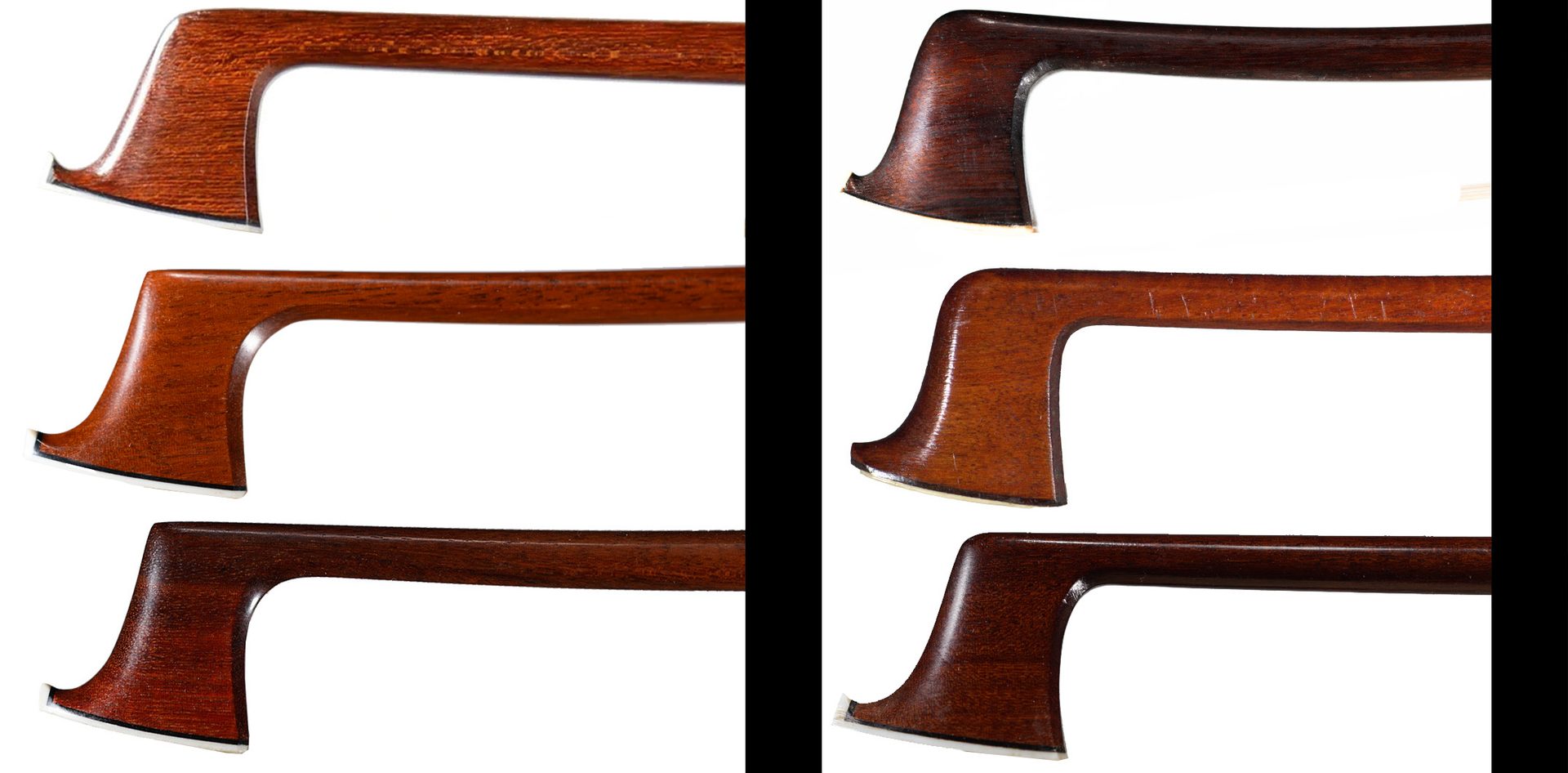
Note on the photomontage (Figure 27): five of the six bows reproduced were photographed directly by the author. The sole exception is the "Mexican pernambuco" bow signed M. Pereira, whose photograph is taken from the Fiddlershop product listing (https://fiddlershop.com/products/arcos-lusitania-silver-special-select-mexican-pernambuco-violin-bow, consulted May 2026), reproduced courtesy of Fiddlershop / Joe Adkins, with permission.
This contemporary case offers a real-time demonstration of the mechanics studied in this essay. A Mexican wood accesses two very different markets depending on the name it bears: under the frank botanical appellation "Coulteria sp.," it remains confined to the student bow; under the name "Mexican pernambuco," it accesses the professional-range bow market. One must guard against attributing the price gap between the two to the name alone: it also rests on execution quality, mounting, and distribution channel — semi-artisanal in one case, industrial or imported in the other — factors that this comparison does not control. The point that remains, and that suffices for the argument, lies elsewhere: it is the appellation "pernambuco," and not the actual botanical identity of the wood, that opens the door of the premium segment to the material and reassures the musician. One further contresens must be avoided — a contresens that is the very hinge of the argument. The expression "Mexican pernambuco" is neither an oxymoron nor a geographical absurdity: it is the logical outcome of the taxonomy of performance. If "pernambuco" names a material behaviour and not an origin — the thesis this essay defends from beginning to end — then a pernambuco "from Mexico" is perfectly conceivable, and that is indeed how the market understands it. The term nonetheless continues to carry, beneath the surface, its charge of prestige — the idea of "real" Brazilian pernambuco — and it is this residual connotative claim to authenticity, more than the measurable performance of the wood, that grounds the properly symbolic part of its value. The word thus operates on two simultaneous registers: detached enough from its geographical origin for "from Mexico" to be appended without shocking anyone, but freighted enough with history to stand, on its own, as a selling argument.
It remains to be asked what "Mexican pernambuco" covers, botanically. The answer is illuminating precisely because there is no single one. In preparing this study, the author had initially identified these blanks as Coulteria platyloba (Chakté Viga) — an identification unambiguously supported by several speciality timber suppliers who explicitly sell Chakté Viga under the mention "also known as Mexican Pernambuco" (Woodpeckers; Savage Woods, which gives "Caesalpinia platyloba, also known as Mexican Pernambuco, Paela"). But another, equally established, commercial source describes its M. Pereira "Mexican Pernambuco" bow as cut from logwood — Haematoxylum campechianum — specifying that "logwood is known to some as 'Mexican pernambuco'" (J.R. Judd Violins). Yet logwood is not a brazilin-bearing wood: it is the haematoxylin species, the blue-black dye that this essay placed from the outset as a "commercial neighbour but chemically distinct" from Brazilwood. The same commercial name thus covers, depending on the supplier, two different botanical genera, one of which does not even belong to the red dyeing chemistry from which "pernambuco" historically derives its meaning.
This hesitation — the author's own, initially — is not a defect of the research: it is its clearest result. When an author devoting an entire essay to denouncing taxonomic confusion is himself caught out, it is because the label has perfectly fulfilled its function: "Mexican pernambuco" designates no stable species, but a promise of performance and prestige under which a brazilin-bearing Caesalpinioideae or a haematoxylin wood can pass indifferently. The market of 2026 reproduces exactly the gesture of Pomet in 1694: placing under a single name woods that botany separates. The taxonomy of performance is not an object of history; it is verifiable, intact, in an online shopping basket.
Yesterday, this substitution operated invisibly on the docks, under the generic appellation palo de brasil; today, with CITES circumvention an added concern, the Mexican supply chain displays itself geographically, while continuing to invoke the royal appellation to justify its price and reassure the musician.
The Experience of Artisan Bow-makers
An experienced bow-maker will legitimately object that he recognises pernambuco by hand — by its density, its elasticity, its response to heat-bending, and its sonority. This workshop knowledge is real and has constituted the basis of craft wood selection since Tourte. But it is necessary to measure precisely what this knowledge authenticates and what it does not.
If modern laboratories today have formal methods for distinguishing these closely related species — Raman spectroscopy, HPLC-MS, anatomical microscopy (see Appendix 2) — their application to the certification of a finished bow remains in practice very limited. Some techniques require micro-destructive sampling, difficult to accept on a valuable piece, while non-invasive methods find their results complicated by the varnishes, oils, and contamination accumulated over decades. The laboratory can sometimes resolve what the eye and hand reach the limits of taxonomically — but often at a level of intervention incompatible with the conservation requirements of a bow signed by a master bow-maker.
The bow-maker's touch and ear identify a profile of mechanical and acoustic properties compatible with use. This is not, strictly speaking, a taxonomic identification. The bow-maker validates a performance, not a species. It is important to do justice to the depth of craft expertise: a master bow-maker does not merely assess density and colour — Paubrasilia echinata carries distinctive anatomical signatures (notably the storied rays that produce the characteristic moire markings on flatsawn surfaces) and presents under the plane or scraper a particular behaviour that a practised hand knows how to recognise. These tactile indices are real, and they constitute a form of non-verbal, phenotypic knowledge, inherited and refined through generations of workshop practice; but it remains a qualitative classification a posteriori on a sample, not a botanical identification a priori.
The nineteenth-century bow-maker did not individually sort logs in a tropical forest. He ordered planks — later raw blanks — often by the dozen or by the hundred, on the basis of the commercial classification made by his supplier. He discovered the true properties of each piece only after several weeks or months, at the workbench, as he began to work it. What this manual contact then revealed was binary and qualitative: this is good wood, or this piece is worthless. Rejected pieces were either reworked into lesser-quality bows, or discarded. This recognition is real, expert, and refined — but it is a qualitative classification a posteriori on a sample, not a botanical identification a priori. A piece of Caesalpinia sappan or C. platyloba sufficiently dense and well-grained to pass this test would have been retained and used; a P. echinata of aberrant morphotype might, conversely, have been discarded as "bad pernambuco." The workbench test is thus richer than a simple mechanical measurement, but it remains exactly what its name indicates: a performance test at the bench.
This observation opens a strong hypothesis concerning the informal category of "bad pernambuco" that bow-makers themselves recognise: some of these pieces marketed in good faith as Paubrasilia echinata but presenting atypical characteristics could, in certain cases, not belong to this species at all. The detailed anatomical analysis of this hypothesis is developed in Appendix 2.
There is a second reality, still more revealing, that works in the opposite direction. A wood whose DNA certifiably and irrefutably establishes it as genuine Paubrasilia echinata can nonetheless prove mediocre for the bow. If it grew too rapidly (producing wide growth rings), if it presents cross-grain or a twist in the grain, it will fail under the bow-maker's plane, regardless of its perfect taxonomic nobility. This is where the thesis of this essay finds its most complete confirmation: the workbench judges by performance, not by taxonomy — even when the species is the genuine one.[6] Far from invalidating the expertise of bow-makers, this replaces it in its exact epistemic framework: a system of validation by performance, inherited from an era when performance was precisely the only available criterion for evaluating materials (that is, in the mode of knowledge proper to the workshop).
A major bow-maker of the early twentieth century, distinguished as "Meilleur Ouvrier de France," Fétique is known for having frequently used a pernambuco that was "orange-brown" to "light orange-brown" rather than the canonical dark red-brown. The best-supported explanation rests on the documented existence of a laranja morphotype within Paubrasilia echinata itself (Brémaud, 2024). A complementary hypothesis, unverified to date, is that certain bows in his production involuntarily incorporated other red-orange-wooded Caesalpinioideae; resolving this would require anatomical analysis of several documented sticks.
The Fétique case is not isolated. Comparable observations can be formulated regarding certain bows of Émile Ouchard — several datable examples from around 1935–1940 present, on visual inspection, woods noticeably paler than those associated with his canonical production — as well as Eugène Sartory's output, whose early-career bows show dark woods recalling the aesthetic of the previous century, while the later production tends towards noticeably lighter tones. These variations raise several hypotheses — deliberate choice, modification of supply chains, or late use of previously constituted stock — without it being currently possible to distinguish between them on solid documentary or anatomical grounds. A systematic study of these bodies of work remains to be conducted.
What these cases collectively attest is, however, more important than any one of them taken separately. Whether the variation owes to an aesthetic choice, a change of supply, or stock exhaustion, it reveals that the visual category of "canonical pernambuco" has never designated a homogeneous biological reality — including in the workshops that today define the standard of "real pernambuco." Fétique's bench, Ouchard's, Sartory's: three reference workshops, three bodies of work in which the colour of the wood varies beyond what the documented variability of Paubrasilia echinata alone suffices to explain. The workbench sorting mechanism this essay describes — selection by performance, not by taxon — operated even in the workshops that today define the standard of "real pernambuco."
Conclusion
Three results emerge from the preceding analysis. The first is that the trade in dyewoods and pernambuco operated under the regime of a taxonomy of performance: strict botanical identity was neither operational nor verifiable within it, and Linnaean nomenclature deployed itself in parallel with commerce without steering it. On the docks as at the workbench, "Pernambuco" named an expected behaviour — in the dyer's vat, then at the bow-maker's bench — not a taxon. This disconnection between commercial name and material reality is, moreover, not peculiar to wood; it structures the entire raw-material supply of the instrument-maker.
The second result is that this taxonomy of performance produced two distinct sorting mechanisms drawing on the same commercial pool: upstream sorting by commission merchants classifying logs by density and pigment intensity, and downstream sorting at the workbench. The presence of Paubrasilia echinata in historical bows, anatomically documented on a sample of five pieces (Macedo et al., 2020), is plausibly the product of this downstream filtering, not of upstream botanical discrimination. For the elite bows of the great masters, the historical record can legitimately support the use of Paubrasilia echinata; for the Mirecourt production-line output, the same taxonomic certainty does not impose itself.
The case of Coulteria platyloba remains a plausibility study, not a historically demonstrated substitution. What the essay establishes is that the commercial system made such substitution structurally possible and likely recurrent — not that it is proven by direct archival evidence.
The third result concerns the present. In December 2025, at CoP20 in Samarkand, 185 sovereign States Parties to CITES adopted Decisions 20.239–20.243, tasking the Secretariat with developing by 2028 the traceability mechanisms applicable to Paubrasilia echinata. This diplomatic recognition ratifies the structural argument of this essay: botanical traceability is not a spontaneous property of the market — it is a system that remains to be built.
This work does not in any way challenge the ecological importance of Paubrasilia echinata or the legitimacy of conservation policies. Its subject concerns the historical fluctuation of nomenclatures and the limits of traceability applied to materials circulating in chains predating modern identification systems. The effort to build prospective traceability is necessary; the difficulty of doing so retrospectively results from a system we have inherited that was never designed to support botanical claims.
Acknowledging that we will never be certain of the biological identity of the woods sold under the name "Pernambuco" in the nineteenth century is not a historiographical admission of weakness. It is, on the contrary, the acceptance of a scientific reality: on the maritime routes of pre-modern globalisation, chemistry and profit dictated the names, leaving to botany — and now to history — the task of unpicking the threads a century later.
Appendix 1 — Species Likely to Have Circulated under Generic Appellations
Selection criteria: presence of brazilin or related pigments, commercially relevant distribution range, and plausibility of documented or inferable nomenclatural confusion.
Appendix 2 — Identifying Pernambuco on a Finished Bow
This appendix examines the question of species verifiability on a finished product, in order to measure the extent to which an actor in the commercial chain (historically and today) could or can genuinely certify the botanical identity of the wood they handle. It is essential to consider the finished product, because a trained botanist or xylotomist can today — and could in principle from the nineteenth century — distinguish raw Paubrasilia echinata from raw Haematoxylum brasiletto on the basis of end-grain anatomy, under a simple high-power loupe (10×). The problem this paper addresses is not that these woods are biologically indistinguishable in their raw state — they are not — but that the historical market chose not to distinguish them at the raw-material stage (on the docks), while modern inspectors are physically prevented from doing so at the finished-product stage (on a varnished bow). Botanical precision is therefore, by turns, economically without interest upstream and physically unverifiable downstream.
The Limits of the UV Test on a Finished Bow
The UV fluorescence test on an aqueous extract, which allows pernambuco to be distinguished from some of its relatives on fresh raw wood, becomes rigorously inapplicable to a finished bow for two reasons. The first is mechanical: a bow is systematically varnished or surface-treated. The varnish, however thin, filters or modifies the UV response and renders any fluorescence reading uninterpretable without prior sampling. The second, more fundamental, is chemical: yellow fluorescence under UV is not an exclusive property of Paubrasilia echinata. Caesalpinia sappan also produces bright yellow fluorescence under UV excitation. The test therefore does not discriminate between brazilin-bearing species — it discriminates only between woods rich in brazilin and those that are poor in it. The idea that a luthier or a customs officer, in 1850 or even today, could authenticate pernambuco using this simple test is therefore without scientific foundation.
What Modern Science Requires for Reliable Identification
The methods genuinely discriminating between closely related species are all either destructive or require laboratory equipment.
Raman spectroscopy (FT-Raman) — A study published in Analyst (RSC Publishing, 2003) applied this technique to archival samples of C. echinata, C. sappan, H. brasiletto, and H. campechianum to establish an identification protocol using spectral biomarkers. Although non-destructive, this method requires a precision Raman spectrometer inaccessible outside a specialised laboratory.
HPLC coupled with mass spectrometry — A 2025 study (Nasilowska & Lech, ScienceDirect) developed an analytical protocol combining HPLC-UV-Vis-ESI MS/MS with chemometric analysis to specifically differentiate logwood, sappan, pernambuco, and peachwood (H. brasiletto) — exactly the four species historically confused in "Brazilwood" cargoes. This level of analysis belongs to heritage conservation laboratories.
Wood anatomy (microscopy) — Macedo et al. (2020) analysed the anatomy of five historical French bows — a Lupot (1810), a Grand Adam (1840), a Vuillaume (1850), a Sartory (1890), and a Mirecourt bow of 1920 — by comparison with 33 Brazilian reference specimens. All five sticks were identified as Paubrasilia echinata of the "arruda" morphotype, most likely from north-eastern Brazil (Rio Grande do Norte and Paraíba). While the most accessible of the three methods, it remains semi-destructive (requiring a micro-sample).
The CITES Paradox: Certifying without Being Able to Verify
The contemporary regulatory situation illustrates the practical impossibility of identification. The certification procedure rests on a written declaration by a bow-maker or expert evaluator. No chemical or anatomical test is required. The chain of trust therefore remains documentary and declaratory — exactly as it was in the nineteenth century, except that an administrative form has been added. CoP20 in Samarkand (December 2025) explicitly acknowledged this gap by adopting Decisions 20.239–20.243, which task the CITES Secretariat with developing, over three years, the traceability mechanisms that do not yet exist.
This essay's argument concerns retrospective traceability — the a posteriori application of taxonomic certainty requirements to historical materials — and not the value of contemporary monitoring instruments, whose utility is real. These two objects are distinct: to conflate them is to extend to a historical object an evidentiary requirement that no contemporary source could have satisfied. Ultimately, if the international institutions for biodiversity protection have renounced requiring analytical verification of the species on a finished bow, it is precisely because such verification is, in practice, impossible without partially destroying the object. To project retrospectively onto nineteenth-century actors an identification capacity that we do not yet possess today constitutes a methodological anachronism.
Notes
Sources — Part III
On Bow-making and the Historical Trade in Instrument-making Woods
Childs, Paul, François Tourte, Bowmaker (2023) — receipt of 13 December 1825 mentioning bois de brésil, coral, and amourette; receipt of 31 December 1825 detailing three plain violin bows at 24 francs each, a fourth at 36 francs, and a plain cello bow at 42 francs; Bibliothèque du CNSMD. — Denver Violins, "A Brief History of Pernambuco and Bowmaking" (snakewood/pernambuco transition, the crates story, the Tubbs family). — Basford, John, "Bow Wood from the Seventeenth to the Nineteenth Century," published by Tim Toft Violins (snakewood trade, Couratari, citing Bernal, Valente and Pissarra). — baroquebows.com, "My Approach" (use of snakewood through the early nineteenth century).Aniano, John B., « Alternative Woods for Bow Making », in The Conservation, Restoration, and Repair of Stringed Instruments and Their Bows, ed. Tom Wilder, vol. 1, General Issues Concerning Stringed Instruments and Their Bows, pp. 48–51 (Montréal: IPCI-Canada; London: Archetype Publications, 2010).
On the Scientific Identification and Anatomy of Bow Woods
Alves, Longui & Amano (2008), IAWA Journal 29(3) — anatomy of pernambuco for bows. — Brémaud (2024), Holzforschung — physical and optical variability of pernambuco. — Macedo et al. (2020), IAWA Journal 41(3) — anatomy of historical French bows. — Nasilowska & Lech (2025), ScienceDirect — HPLC-MS discrimination of dyewoods. — Edwards et al. (2003), Analyst (RSC) — Raman spectroscopy of brazilwoods. — American Federation of Musicians / American Orchestras (2023) — CITES guide for bow owners.
On Retrospective Taxonomic Reconstruction of Historical Exotic Woods
Roubo, André-Jacob, L'Art du menuisier ébéniste, Paris, Académie royale des Sciences, 1774, third section of the third part, pp. 768–781 (description of 48 exotic species, including Brazilwood and its variants, with explicit admission of the limits of nomenclature: "Il se pouroit très-bien faire... que les mêmes sujets diffèrent quelquefois dans leurs différentes parties, ce qui a sûrement fait donner plusieurs noms à des bois qui peut-être viennent d'une même espèce d'arbre."). Digitised on Gallica (BnF). — Détienne, Pierre, "Les bois exotiques décrits par Roubo, en 1774," Bois et Forêts des Tropiques, no. 274 (4), 2002, pp. 89–94. CIRAD-Forêt, Montpellier. This peer-reviewed article by a specialist xylologist is the principal academic reference for the retrospective reconstruction of the botanical identity of the exotic woods described by Roubo. Détienne proposes notably the attribution: "Les bois moins prisés venant des Antilles auraient été produits par des espèces voisines de Guilandina: Caesalpinia brasiliensis L. (poussant à Haïti et non au Brésil), Caesalpinia bahamensis Lam. (Bahamas et Cuba), et peut-être aussi par Caesalpinia granadillo Pitt. de la côte vénézuélienne." He also identifies the "coral" of Roubo as Pterocarpus officinalis Jacq. or P. rohrii Vahl (Fabaceae). — Colmeiro, Miguel, Diccionario de los diversos nombres vulgares de muchas plantas usuales o notables del antiguo y nuevo mundo, Madrid, Imprenta de Gabriel Alhambra, 1871, pp. 146–147, entries "Palo Brasil ó Brasilete," "Palo Campeche," and "Palo de Fernambuco": seven species belonging to three distinct genera recorded under the same appellation. The copy digitised by HathiTrust (University of California, Google digitisation, Record 006292466) bears manuscript annotations by an anonymous Hispanic reader of the late nineteenth or early twentieth century, together with the stamp of the Librería de F. Rodríguez, Antiguas y Modernas, Cruz 31, Madrid.
On Dyewoods, their Taxonomy, and their Commercial History
Mathew & al. (2007), Caesalpinia sappan — An economic medicinal tree for the tropics. — Dapson & Bain (2015) — commercial ecology of dyewoods. — Marichal & Pretel (2024) — secondary dyeing economies. — Cardim Cardoso et al., Anais da Academia Brasileira de Ciências — Arab trade in red wood attested from 851. — PROSEA, Caesalpinia sappan entry.
On the Botanical Distribution and Nomenclature of Species
CITESwoodID / delta-intkey — Coulteria platyloba entry (syn. Caesalpinia platyloba). — ITTO Tropical Timber Info — Chakté-Viga entry. — Kew Plants of the World Online (POWO) — Brosimum guianense entry. — CABI, Caesalpinia violacea entry.
On Contemporary Traceability and CITES Regulation
CITES CoP20 (Samarkand, 24 November – 5 December 2025), Brazil's Proposal 46 (withdrawn) and amended Annotation #10 (adopted by consensus, in force 5 March 2026). — CoP20 Doc. 97 and Annexes — Paubrasilia echinata bows: Fine tuning traceability solutions, CITES Secretariat report (2025). — Decisions 20.239–20.243 (traceability mandate, CoP21 Panama 2028). — ENB/IISD, Earth Negotiations Bulletin, daily summary CoP20 (26 November 2025). — IPCI France-Europe (Arthur Dubroca, Edwin Clément), official post-CoP20 assessment.
On the Price Hierarchy and Economics of Nineteenth-century Dyewoods
Guillaumin et Cie (eds.), Dictionnaire universel théorique et pratique du commerce et de la navigation, Paris, 1859–1861, articles "Brésil (Bois de)," "Brésillet," "Fernambouc," "Sapan," and "Campêche." Digitised on Gallica (BnF), ark:/12148/bpt6k35390d. — Girardin, Jean-Pierre, Leçons de chimie élémentaire appliquée aux arts industriels, 4th ed., Paris-Lille, 1860–1861, vol. II, section "Matières tinctoriales rouges," pp. 394–398. Digitised on Cnum (CNAM).
On Commercial and Taxonomic Nomenclature of Pernambuco before 1850
Savary des Bruslons, Jacques (continued by Philémon-Louis Savary), Dictionnaire universel de commerce, vol. 1, 1726–1732, article "Brésil": documented distinction between five sorts — Fernambouc, Japon, Lamon, Sainte-Marthe, brésillet des Antilles — "le plus estimé est le Brésil de Fernambouc"; differentiated import duties. Digitised on Gallica (BnF). — Dictionnaire raisonné-universel de matière médicale, vol. 1, 1773, article "Bois du Brésil ou Bois de Fernambouc," pharmaceutical designation in Latin Lignum brafilianum rubrum — apothecary nomenclature system parallel to the commercial and Linnaean systems. Digitised on Gallica (BnF). — Beausobre, M. de, Introduction générale à l'étude de la politique, des finances et du commerce, vol. 1, new edition, 1791: confirms the grade hierarchy Fernambouc > Lamon > Sainte-Marthe > Siam > brésillet des Antilles, and the use of Brazilwoods as "fausse couleur" in dyeing. Digitised on Gallica (BnF). — Fourcroy, Antoine-François, Système des connaissances chimiques, vol. 4, 1800–1801: attempt at Linnaean attribution of three commercial varieties (Fernambouc = Caesalpinia crista; Sapan = C. sappan; brésillet = C. vesicaria) — the attribution of Fernambouc today recognised as erroneous. Digitised on Gallica (BnF). — Guillaumin, Gilbert-Urbain (ed.), Encyclopédie du commerçant: Dictionnaire du commerce et des marchandises, 1840, articles "Bois de teinture" and "Bois de Brésil ou Brésillets": explicit admission that "les données scientifiques que l'on possède sur ces arbres sont fort peu étendues, et laissent encore planer bien des doutes sur la classification des variétés commerciales qui ne diffèrent souvent entre elles que par les pays qui les produisent." Digitised on Gallica (BnF). — Pomet, Pierre, Histoire générale des drogues, Paris, 1694, Book III, ch. XIV. Digitised on Gallica (BnF), ark:/12148/bpt6k1041773w.
On the mechanical properties and vernacular polyphyly of Chakté-viga
Silva Guzmán, J. A., Fuentes Talavera, F. J., Rodríguez Anda, R., Torres Andrade, P. A., Lomelí Ramírez, M. G., Ramos Quirarte, J., Waitkus, C., & Richter, H. G. (2012). Caracterización tecnológica de las especies de madera — Capítulo 3, Proyecto ITTO PD 385/05 Rev. 4 (I,F): Industrialización, Comercialización y Manejo Sostenible de diez Especies Nativas Mexicanas. Universidad de Guadalajara, Departamento de Madera, Celulosa y Papel. — Establishes for Chakté-viga an air-dry density of 0.891–0.958–1.014 g/cm³ and the highest tangential flexural strength of the eleven Mexican species tested. Documents that two logs received under the single vernacular name Chakté-viga proved on anatomical examination to belong to two distinct species of the genus Caesalpinia (C. cf. platyloba and an undetermined Caesalpinia sp.), macroscopically nearly identical yet diverging sharply in the ultraviolet fluorescence of their aqueous extracts. Yucatán anecdote (c. 2010): researchers returning to the peninsula to collect further specimens were unable to secure material from local ejidos, whose members preferred higher-paying export sales to Chinese buyers (H.-G. Richter, personal communication, May 2026).
On Intraspecific Variability of Paubrasilia echinata
Macedo et al. (2019), Flora — intraspecific variation along a latitudinal gradient. — Brémaud (2024), Holzforschung — physical and optical variability. — Kafino et al. (2024), Science & Justice (PMID 38431373) — strontium isotopic fingerprinting.— Brémaud, I., "Approches culturelles et mécaniques dans le choix des bois en facture instrumentale: cas des archets anciens," in Castellengo, M. & Genevoix, H. (eds.), La musique et ses instruments, Paris: Éditions Delatour France, 2010 — density range for bow-making pernambuco: 0.9–1.2 g/cm³; Young's modulus: 15–32 GPa.Lima, Haroldo C. de. « Pernambuco: The Tree that Brings Forth Music », in The Conservation, Restoration, and Repair of Stringed Instruments and Their Bows, ed. Tom Wilder, vol. 1, pp. 5-18 (Montréal: IPCI-Canada; London: Archetype Publications, 2010).
On Contemporary Suppliers
Sebim Instrument (sebim-instrument.com), bow listings Chakte Viga and Coulteria sp., consulted May 2026; direct communication to the author. — Espen Tonholz/Tonewood (shop.espen.de), listing "Bow Blank Violin Caribbean Pernambuco Lucchi 5100–5199" (ref. KPN30304), consulted May 2026. — Fiddlershop (fiddlershop.com), listing "Arcos Lusitania Silver Special Select Mexican Pernambuco Violin Bow," consulted May 2026. — Woodpeckers (woodpeck.com) and Savage Woods (savagewoods.com), "Chakte Viga" listings identifying the species as Coulteria / Caesalpinia platyloba "also known as Mexican Pernambuco."
Photographic Credits
David Lange Engnald, two photographs from the thread "Chakte Viga — a very colorful wood," penturners.org, August 2020, reproduced with his authorisation. — Marc Ferrez, Porto de Santos, c. 1870. Acervo do Instituto Moreira Salles, via Wikimedia Commons (public domain). — William Notman, Loading ship with square timber through the bow port, Quebec City, 1872. Notman Photographic Archives / McCord-Stewart Museum (ref. I-76319), via Wikimedia Commons (public domain). — Maison E. Ouchard workshop, Mirecourt, c. 1922–1930: sepia postcard, original source unidentified; chromatic restoration by the author (digital image editing and generative AI-assisted color restoration, 2025); all rights reserved.
The author thanks Anne Levi for her careful reading of the manuscript. The author also thanks Dr. H.-G. Richter (Universität Hamburg, ITESwoodID) for the permission to reproduce the anatomical images and for the confirmation of the etymology of "brasil" from the Portuguese "brasa."
The author made use of AI assistance tools in the preparation of this text, notably for the translation of sources, the structuring of the argument, stylistic revision, and certain technical verifications. The historical interpretations, analyses, arguments developed, and editorial choices are entirely the responsibility of the author.